Insights & guides
Electrical guides for Singapore homes & businesses
Straight answers from a Grade 8 Licensed Electrical Worker — on EV chargers, supply upgrades, renovation wiring, and the LEW and EMA rules that apply to your project.
 Illustration
EV Charging
4 guides IllustrationEV Charging
Why Your EV Charger Needs a Periodic Inspection
An EV charger is one of the hardest-working circuits in your home or building. Singapore requires periodic inspection under the EV Charging Act — every 24 months for a landed home, and every 6 to 12 months for commercial and public chargers. Here is what it covers and who must do it.
 IllustrationEV Charging
SS 722 Explained: What Singapore's New EV Charging Standard Means for You
TR 25 became SS 722 on 1 April 2026. What actually changed, whether it is mandatory yet, and what it means if you are installing a home charger now.
 IllustrationEV Charging
Type A vs Type B RCD for EV Chargers: Which Does Your Home Need?
EV chargers can introduce DC fault current a normal RCD may miss. The difference between Type A and Type B in plain English — and why most modern chargers let you use Type A.
 IllustrationEV Charging
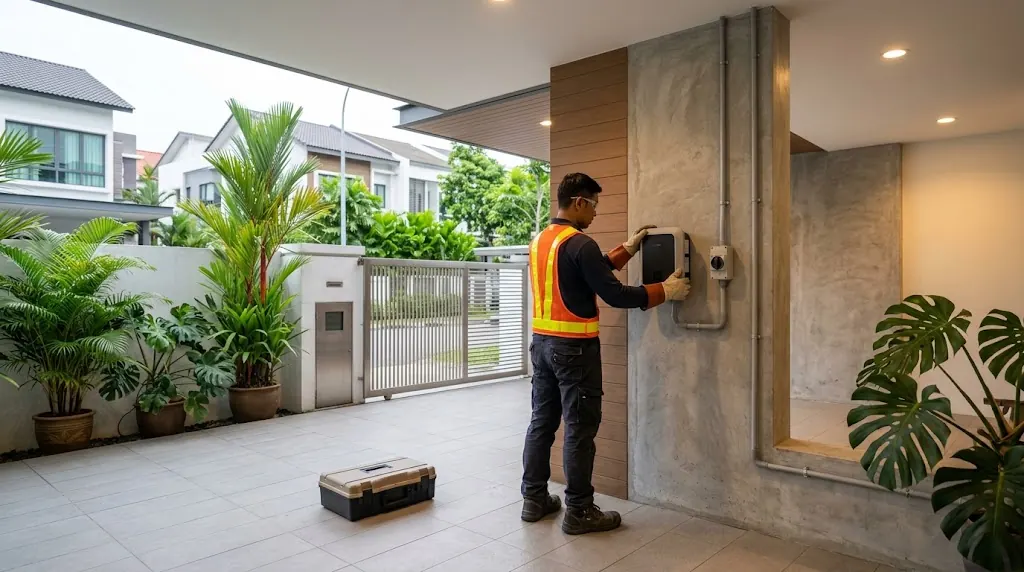
EV Charger Installation in Singapore: A Homeowner's Guide
LTA registration, the new SS 722 standard, choosing between 7.4–22 kW, what drives the cost, and how a landed-home install actually works.
Commercial Fit-Out
3 guides IllustrationCommercial Fit-Out
Does a Tenant Fit-Out Need Its Own EMA Licence? Landlord LEWs, SP Accounts and the Switch-On
When a tenancy needs its own electrical installation licence, what the landlord’s LEW signs, the SP Group forms for each load, and the paperwork that can delay the switch-on — from EMA’s and SP’s own guidance.
 IllustrationCommercial Fit-Out
DALI, KNX, Casambi or Lutron? Choosing Lighting Controls for a Fit-Out
What each lighting-control system means for the cabling, the distribution board and the programme, where the cost goes, and the late changes that cost the most — for designers specifying a commercial fit-out.
 IllustrationCommercial Fit-Out
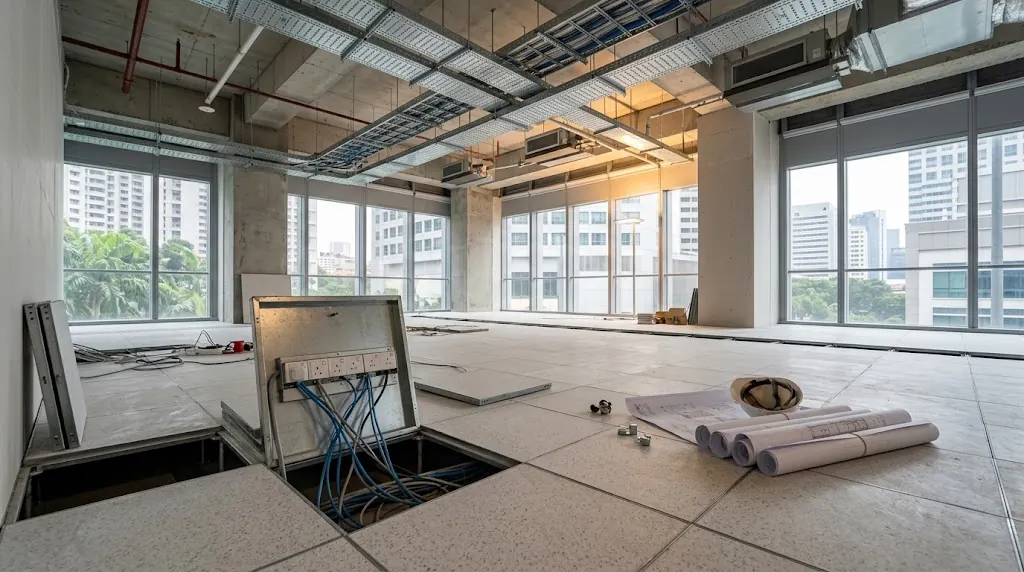
Planning the Electrical for an Office Fit-Out: A Guide for Interior Designers
The landlord's fitting-out rules, the tenancy load, what to send your electrical contractor, lighting controls, floor boxes, night shutdowns and handover — what shapes the electrical on a Singapore office fit-out, and when to settle each part.
Compliance
2 guides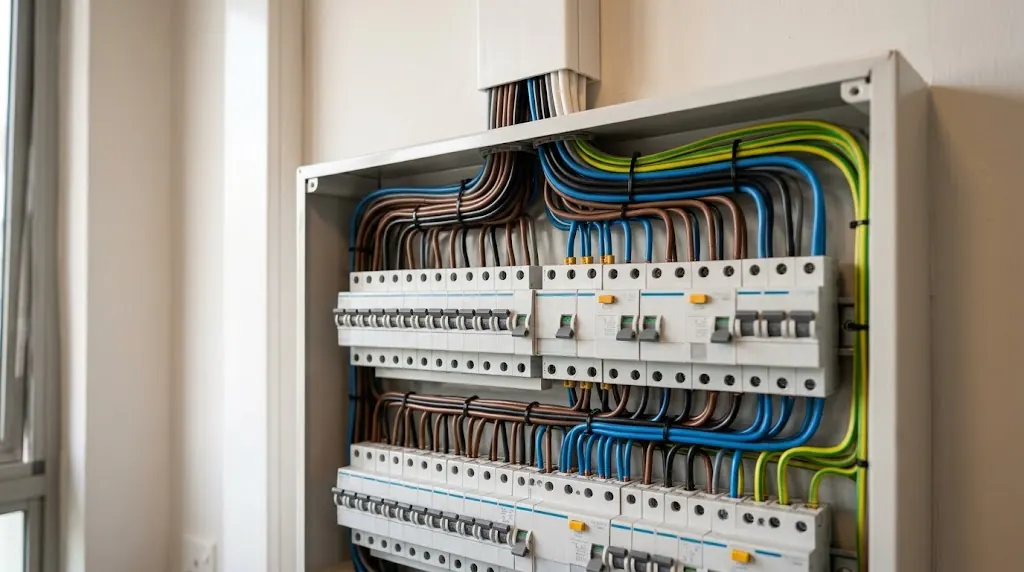 IllustrationCompliance
What Is SS 638? Singapore's Wiring Code, Explained for Homeowners
The rulebook behind every safe electrical installation in Singapore — RCD protection, cable sizing, earthing, and who signs it off — without the jargon.
 IllustrationCompliance
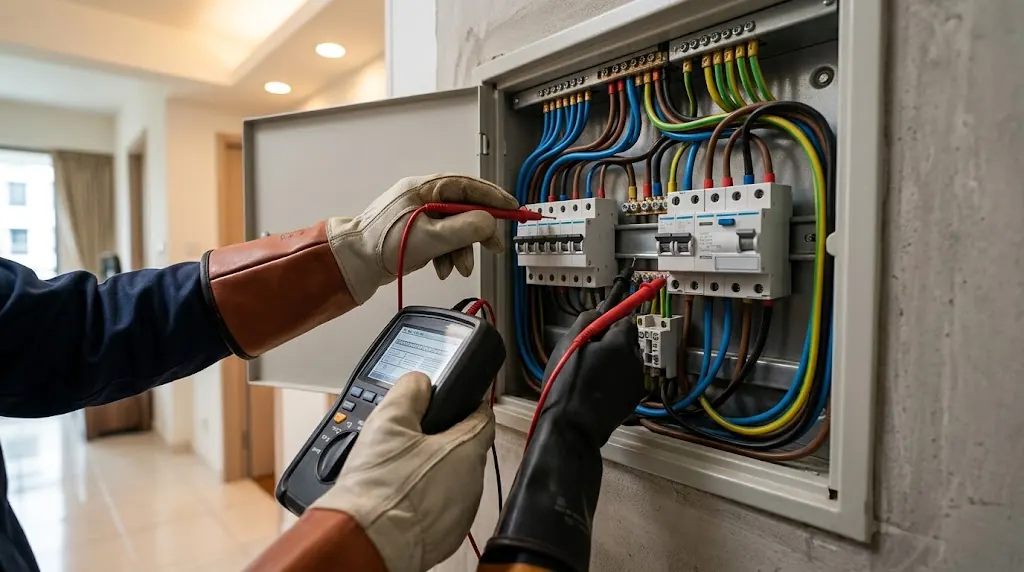
Do You Need a Licensed Electrical Worker (LEW) in Singapore?
What an LEW is, how the grades work, when the law requires one, and how EMA installation licences and endorsements fit together.
Power Supply
2 guides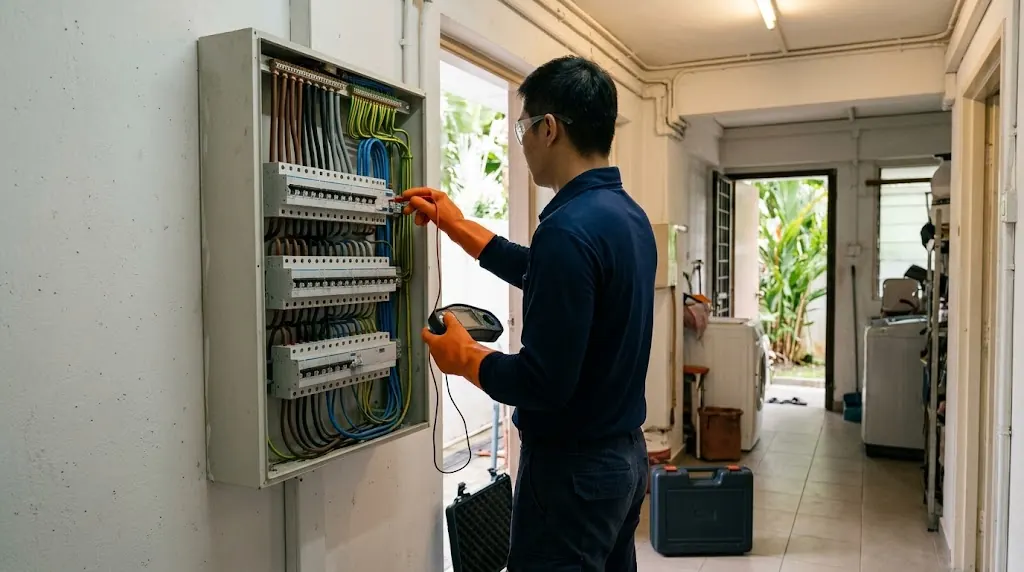 IllustrationPower Supply
Upgrading a Landed Home to Three-Phase Power: What Actually Happens
Solar, an EV, induction cooking, a pool — as home electrical loads climb, more landed homes outgrow single-phase. The real process: who applies to SP Group, what gets replaced, the official connection charges, and how long it takes.
 IllustrationPower Supply
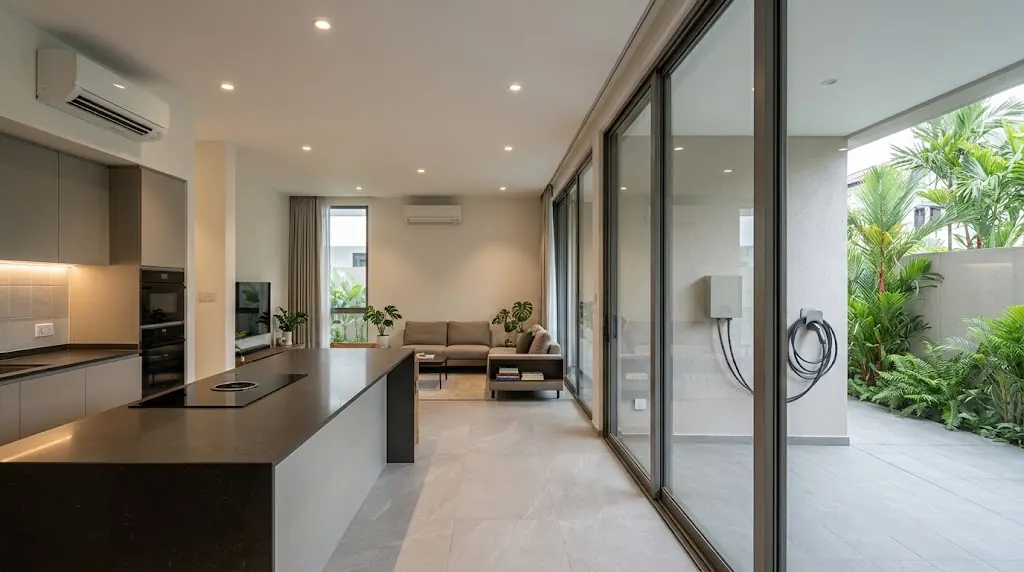
Do You Need to Upgrade to 3-Phase Power?
EV chargers, multiple aircon units, a big reno — when single-phase runs out of headroom, and what a three-phase upgrade actually involves in Singapore.
Renovation
2 guides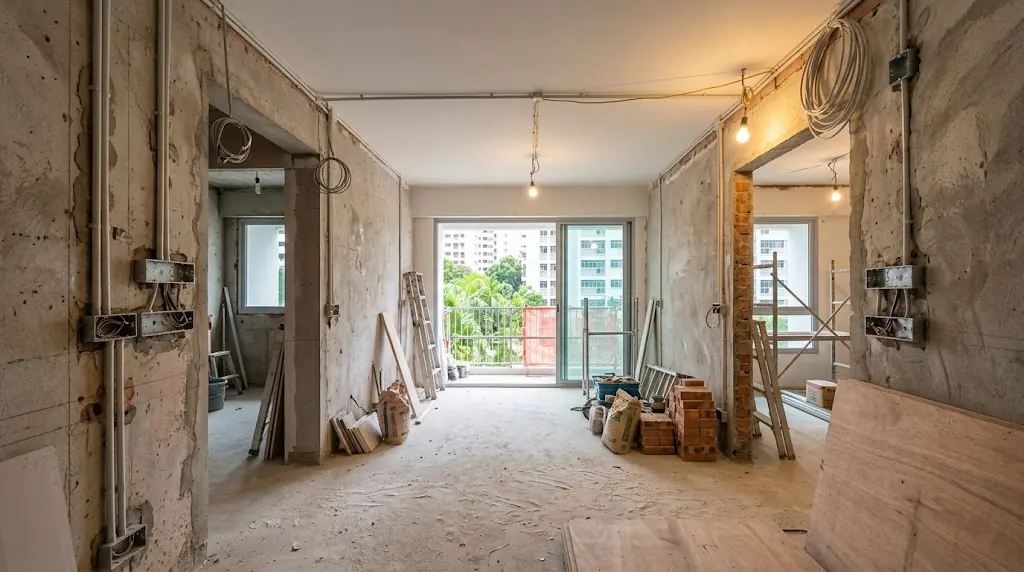 IllustrationRenovation
Renovating Your Home? Plan the Electrical Before the Walls Close Up
Where your points and power go, how kitchen, aircon and EV loads add up, what the market charges, when a licensed electrician must step in — and how to keep electrical, aircon and plumbing pulling in the same direction.
 IllustrationRenovation
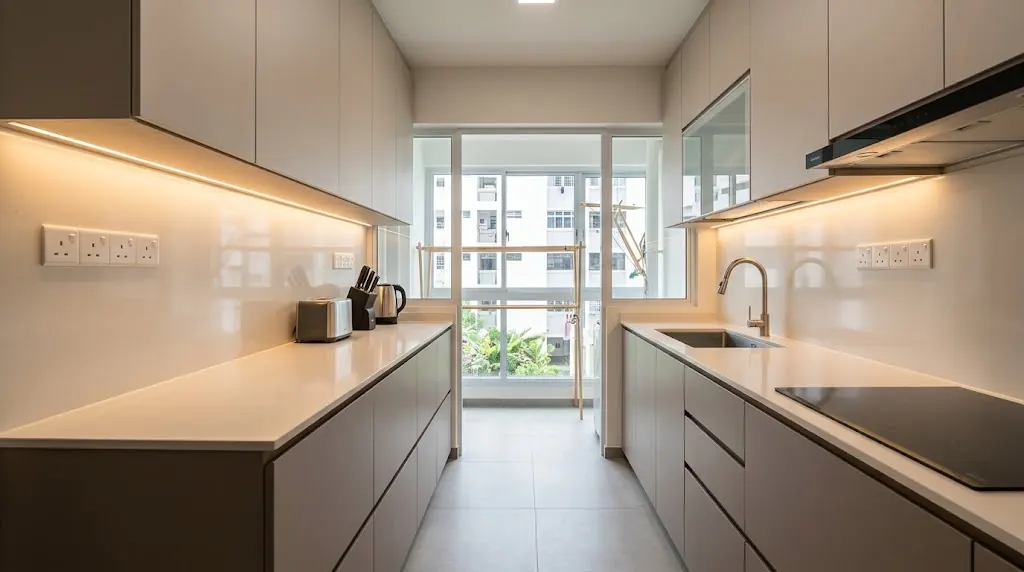
Renovating an HDB BTO or Condo? Why the Electrical Work Needs a Licensed Electrician
Your interior designer bundles 'electrical' into the package — but who actually pulls the wires? In Singapore, renovation electrical work must be done under a Licensed Electrical Worker, by trained electricians. Here's why that matters for your safety, your insurance and your handover.