EV charging
EV Charger Installation in Singapore — Landed Homes & Commercial
From a 7.4 kW home charger to multi-bay commercial sites, BSH installs EV chargers end to end across Singapore — load assessment, DB upgrade, wiring and commissioning — every job wired to SS 638 and signed off by a Grade 8 Licensed Electrical Worker, with the endorsed paperwork you need to register the charger with LTA.
What's included in an EV charger install
Home (landed) charging
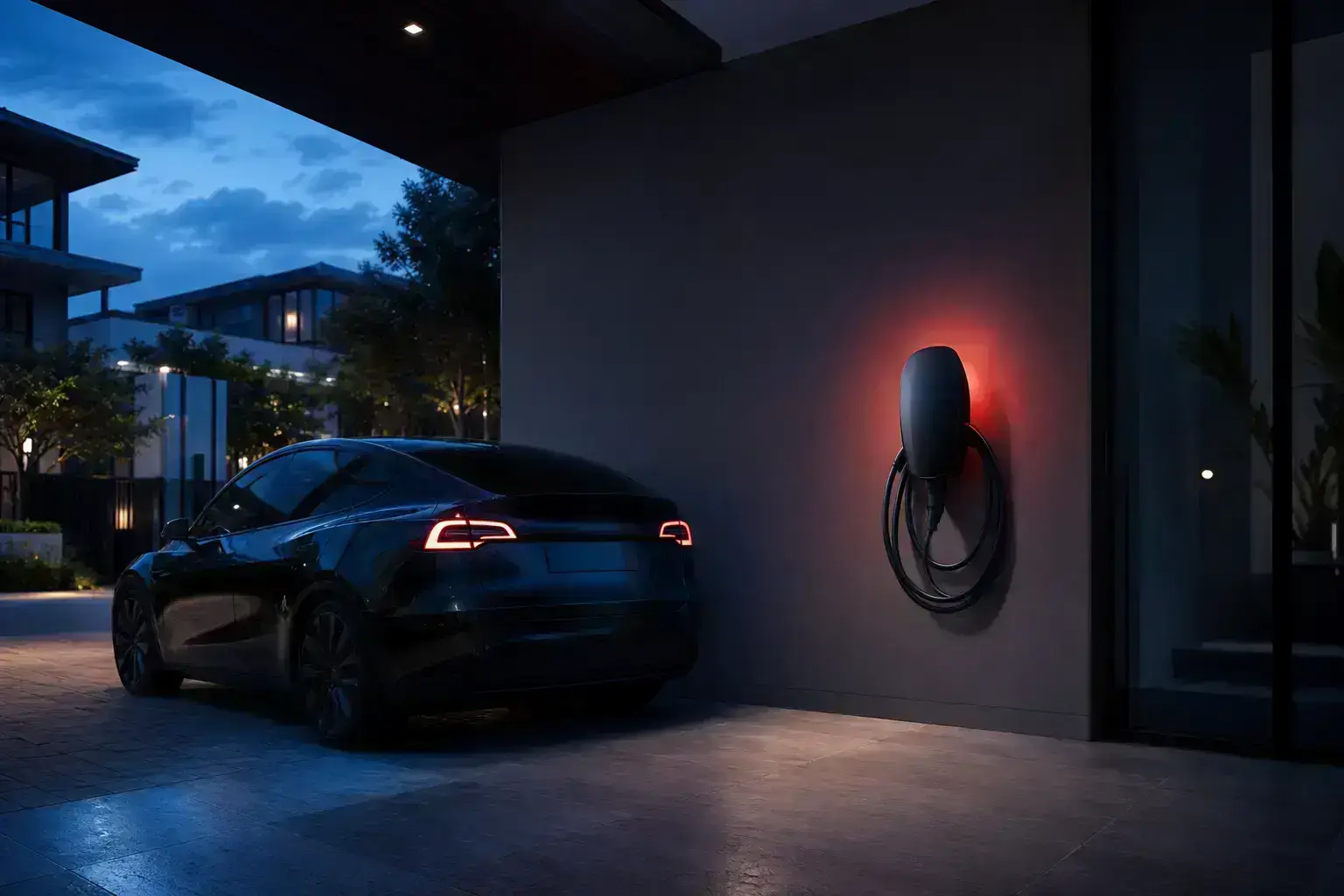
7.4 kW single-phase, or 11 kW and 22 kW three-phase chargers for landed homes, mounted at your car park with isolator and a dedicated protected circuit.
Condo & MCST coordination
Charger installation in condominium car parks, including coordination with your MCST and managing agent.
Commercial & multi-bay
Multi-charger commercial installations with load management, contactor control, emergency stop and signage to the EV charging standard (SS 722).
Load assessment & DB upgrade
We check your main breaker and DB capacity, and upgrade single-phase to three-phase or replace an ageing DB where needed.
All major brands
All major EV charger brands — supply-and-install, or install-only if you've already bought your charger.
Compliance & COF (Form 1)
We wire to SS 638 — Singapore’s national wiring code — with the correct Type A/B RCCB and protection, build to the EV charging standard (SS 722, formerly TR 25), and issue the Certificate of Fitness (Form 1) — endorsed by an Equipment Specialist and a Licensed Electrical Worker — that you need to register the charger with LTA.
Our work
Photographs from BSH installations — not stock images.


Get a price before you call
Scope your job with our free tools and get an indicative price in minutes — no obligation.
From enquiry to charging
Online assessment
Use our EV tool to share your home, car and charger; we give an indicative scope.
Site survey
We confirm main breaker rating, spare DB ways and cable-run distance.
Install by a Grade 8 LEW
Charger, isolator, RCCB and dedicated circuit wired to SS 638.
Certify & hand over
We complete the COF (Form 1), hand over a tested, compliant charger, and give you everything you need to register it with LTA.
EV charging across landed estates island-wide
BSH installs EV chargers across landed estates island-wide — Holland Grove, Luxus Hill, Tagore Avenue, King's Road and many more — as well as commercial sites. Backed by 789+ projects since 1993, every install is wired to SS 638 and signed off by a Grade 8 Licensed Electrical Worker, with the Certificate of Fitness you need for LTA registration.
Frequently asked questions
Do I need three-phase power for an EV charger?
A 7.4 kW charger runs on a standard single-phase supply, which most landed homes already have. 11 kW and 22 kW chargers need a three-phase supply (a 22 kW unit draws about 32 A per phase). During the site survey we check your main breaker and, if needed, arrange an upgrade.
Does my landed home need an emergency stop button?
No — emergency stop buttons are required for commercial EV installations, not for landed-home chargers. We build commercial sites with the e-stop and signage set out in the EV charging standard (SS 722).
Do you handle LTA registration?
Registration is filed on your OneMotoring account (Singpass), so it stays in your name. We make it simple: we wire to SS 638, build to the EV charging standard, and hand you everything OneMotoring asks for — the charger's type-approval Approval ID, the Certificate of Fitness endorsed by an Equipment Specialist and a Licensed Electrical Worker, and the photos. A registration fee applies at checkout (currently discounted by LTA).
How much does EV charger installation cost?
It depends on the charger power, the cable-run distance, and whether your DB needs an upgrade. Use our free online assessment for a firm quote, or message us and we will scope it.
Can you install a charger I bought myself?
We'd rather supply it for you. If you already have one, it must be a recognised, LTA type-approved model — only type-approved chargers can be registered and used legally in Singapore, so we don't fit unknown or non-approved units. Supply-and-install also keeps the warranty and accountability in one place.
Is the installation compliant with SS 722?
Yes — and it is worth being precise about which standard does what. The fixed wiring is installed to SS 638, Singapore's national wiring code; that is the binding requirement your LEW certifies against. SS 722 is the separate EV charging standard: TR 25 was elevated to it on 1 April 2026, with a transition period that makes it mandatory for new chargers from 1 October 2028, so chargers type-approved under TR 25 remain legal in the meantime. We build to SS 722 today regardless — correct RCD (Type A or B), protection, and, for commercial sites, emergency stop and signage.
Related guides
Read up before you commit — written by our Licensed Electrical Workers.
SS 722 Explained: What Singapore's New EV Charging Standard Means for You
TR 25 became SS 722 on 1 April 2026. What actually changed, whether it is mandatory yet, and what it means if you are installing a home charger now.
Why Your EV Charger Needs a Periodic Inspection
An EV charger is one of the hardest-working circuits in your home or building. Singapore requires periodic inspection under the EV Charging Act — every 24 months for a landed home, and every 6 to 12 months for commercial and public chargers. Here is what it covers and who must do it.
Type A vs Type B RCD for EV Chargers: Which Does Your Home Need?
EV chargers can introduce DC fault current a normal RCD may miss. The difference between Type A and Type B in plain English — and why most modern chargers let you use Type A.
EV Charger Installation in Singapore: A Homeowner's Guide
LTA registration, the new SS 722 standard, choosing between 7.4–22 kW, what drives the cost, and how a landed-home install actually works.
Ready to charge at home?
Get a firm quote in minutes with our free EV assessment, or message us directly.