EMA Electrical Installation Licence
Renew your EMA electrical installation licence
What is an EMA electrical installation licence?
It is a licence the Energy Market Authority issues to the owner or user of a non-domestic electrical installation. Your premises may need one once its approved load exceeds 45kVA — EMA’s own equivalent is 63A three-phase at 400V — and hazardous trades need one at any load. Purely domestic premises are exempt. Licences usually run 12 months. The catch: the renewal application must reach EMA one month before the expiry date printed on it.
Approved load is a figure set with SP Services. It is not your monthly consumption, and it cannot be looked up publicly — so only your own licence or records will confirm it.
Inspection, LEW endorsement and the EMA submission, handled end to end. Most contractors will not quote until they have visited. We publish an indicative price before you call.
The bit almost nobody knows
Your deadline is a month before the date on the licence
The renewal application has to reach EMA not later than one month prior to the date of expiry — Regulation 28(3) of the Electricity (Electrical Installations) Regulations. Most people plan around the expiry date printed on the licence, and most people are therefore a month late in their own heads. Worse, EMA’s renewal notice typically arrives around six weeks before expiry, so the reminder that prompts you lands with about two weeks of slack left — and the inspection, any rectification and the endorsement all have to happen before the application goes in.
Enough runway to get a quote, agree it, book the inspection and still have room if the inspection turns up something that needs rectifying first.
Useful as a prompt, but by the time it arrives you have roughly two weeks of slack left before the application itself is due.
Regulation 28(3) requires the renewal application to reach EMA not later than one month prior to the date of expiry. The inspection and endorsement have to be done before this, not after.
Our free reminder is built around that deadline, not around the expiry date — first note at about ten weeks, a chase when EMA’s own notice lands, and a final call while there is still time to act. Source: the Regulations
Set a free reminderWhere are you right now?
Pick whichever is closest. Every route is free and carries no obligation.
Renewing soon
Not due yet
Not sure
What EMA actually says
We will not tell you that your premises needs a licence — nobody can determine that from the outside. What we can do is show you EMA’s own wording, so you can check it against your own records.
EMA lists three categories that require a licence
- Non-domestic electrical installations with approved load exceeding 45kVA
- Electrical installations used in hazardous trades (e.g. businesses dealing with highly flammable materials, construction work activities, etc.), regardless of approved load
- Supply installations for non-domestic purposes, regardless of approved load
45kVA in practical terms
EMA publishes the equivalence directly: 45kVA is equivalent to 63A three-phase at 400 volts. That lets you sanity-check against your incoming supply or main breaker without anyone visiting.
EMA handbook (PDF)Why we cannot tell you from here
EMA defines approved load as the total electrical load that an electrical installation is designed to handle. It is set with SP Services, so it does not appear in any public dataset — and your main breaker rating is not automatically the same number. Only your own licence, your records or an SP Services check will confirm it.
Domestic premises are exempt
EMA exempts all electrical and supply installations used exclusively for domestic purposes from the electrical installation licensing requirement. If your premises is purely residential, the licensing scheme does not apply to you.
The licence is yours, not ours
EMA issues the installation licence to the owner or user of the installation — you hold it, and you display it at the main switchboard. EMA does not license electrical contractors; it licenses individual workers in three classes. What you engage BSH for is the appointed Licensed Electrical Worker, the inspection, and the submission on your behalf.
How often EMA requires an inspection
A licensed installation has to be inspected and certified fit for operation by the appointed LEW at least once a year — and for several types of installation, considerably more often than that. This is EMA’s own Table 3, complete:
- Construction worksites
- At least once per month
- Installations on worksites take more wear and tear, so EMA requires a monthly inspection.
- Trade fairs, mini-fairs, festive lightings etc
- Daily
- A daily safety inspection, so every part the public can reach stays safe and the protective devices keep working.
- Multi-tenanted buildings, condominiums etc
- At least once in six months
- Communal services — risers, lighting, socket-outlets, protective systems — are inspected twice a year, not once.
- High voltage installations (supply at 6.6kV and above)
- Schedule set by the appointed LEW, but at least once a year
- The LEW works out the inspection and maintenance schedule, consulting the equipment manufacturers.
- Others
- Annually
- The inspection is carried out before the electrical installation licence is renewed.
| Type of installation | Inspection frequency | Why |
|---|---|---|
| Construction worksites | At least once per month | Installations on worksites take more wear and tear, so EMA requires a monthly inspection. |
| Trade fairs, mini-fairs, festive lightings etc | Daily | A daily safety inspection, so every part the public can reach stays safe and the protective devices keep working. |
| Multi-tenanted buildings, condominiums etc | At least once in six months | Communal services — risers, lighting, socket-outlets, protective systems — are inspected twice a year, not once. |
| High voltage installations (supply at 6.6kV and above) | Schedule set by the appointed LEW, but at least once a year | The LEW works out the inspection and maintenance schedule, consulting the equipment manufacturers. |
| Others | Annually | The inspection is carried out before the electrical installation licence is renewed. |
Your appointed LEW may also recommend a higher frequency after assessing the operating conditions and wear and tear on your installation. Before you compare two prices, check which row you are in: a construction worksite quoted as one annual visit is being quoted a twelfth of the work, and common property quoted annually is being quoted half.
Source: EMA, Handbook for Application of Electrical Installation Licence, section 7 and Table 3. Handbook (PDF) · EMA inspection requirements
What a BSH renewal covers
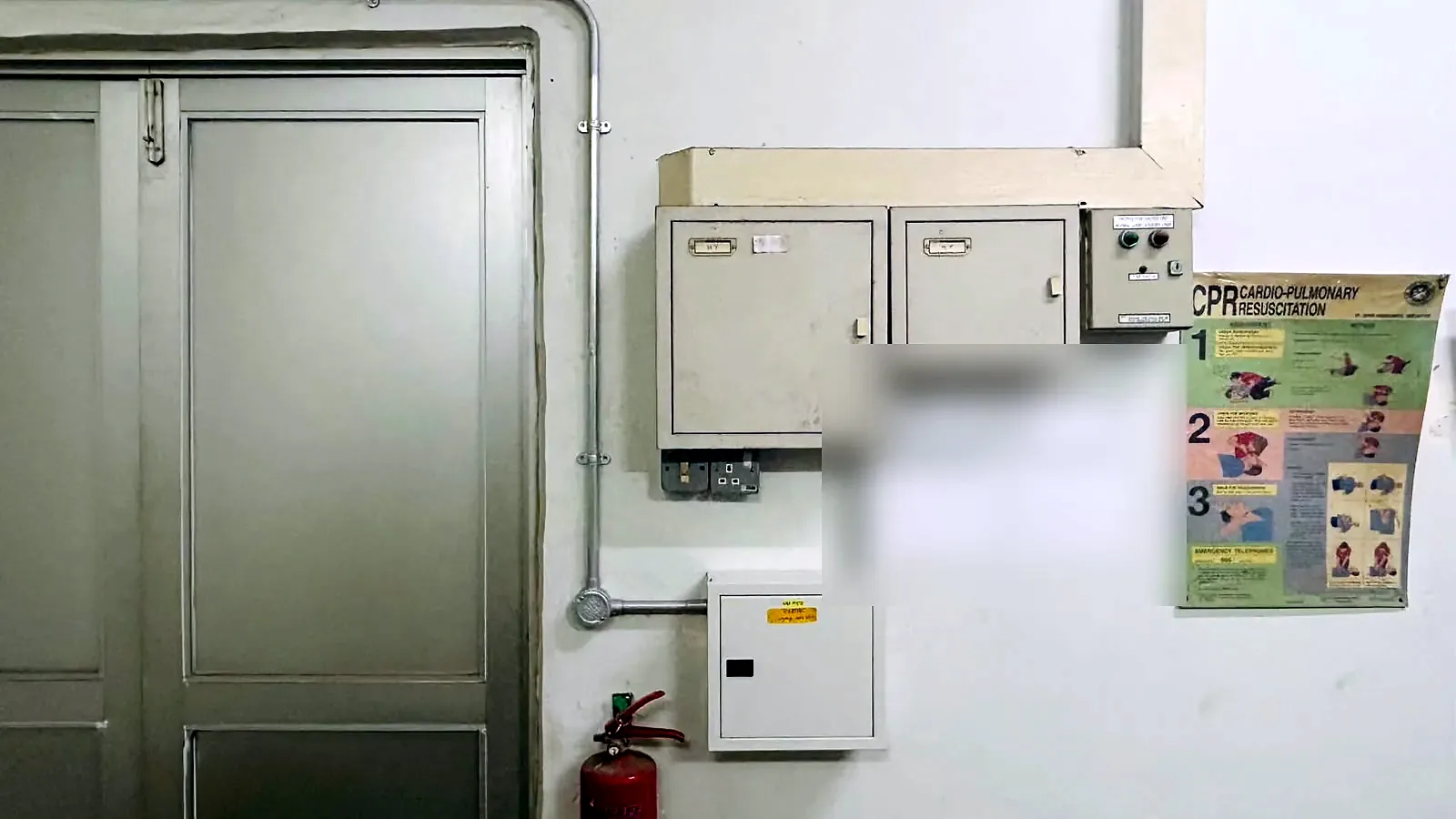
One fee, one point of contact, and your licence does not lapse while you are busy running the business.
Periodic inspection
Inspection and testing to SS 638 Chapter 62 — the chapter that covers periodic inspection and testing of an installation already in service, as distinct from Chapter 61, which is the initial verification of a new installation before it is energised.
Testing to SS 638
A systematic visual inspection first, then the Chapter 62 test sequence — continuity of protective and bonding conductors, insulation resistance, earth-fault loop impedance and RCD operation among them — with the results recorded for your file.
Defect rectification
Anything found during inspection is written up with a clear price before we touch it. No surprise variations after the fact.
LEW endorsement, within class
Our Licensed Electrical Worker — Grade 8, which is the class EMA calls a Licensed Electrical Technician — endorses the installation as the worker responsible for it, up to the load limit that class carries. Beyond that limit we bring in our Professional Engineer / Grade 9 partner, a Licensed Electrical Engineer, to certify. The job stays with BSH either way.
EMA submission on time
We prepare and submit the renewal application so it reaches EMA at least one month before expiry, as Regulation 28(3) requires, and hand the licence back to you.
Next-cycle reminder
We track your next expiry date and start reminding you around ten weeks out — early enough to inspect, rectify and still make the one-month application deadline.
Who is allowed to sign it off
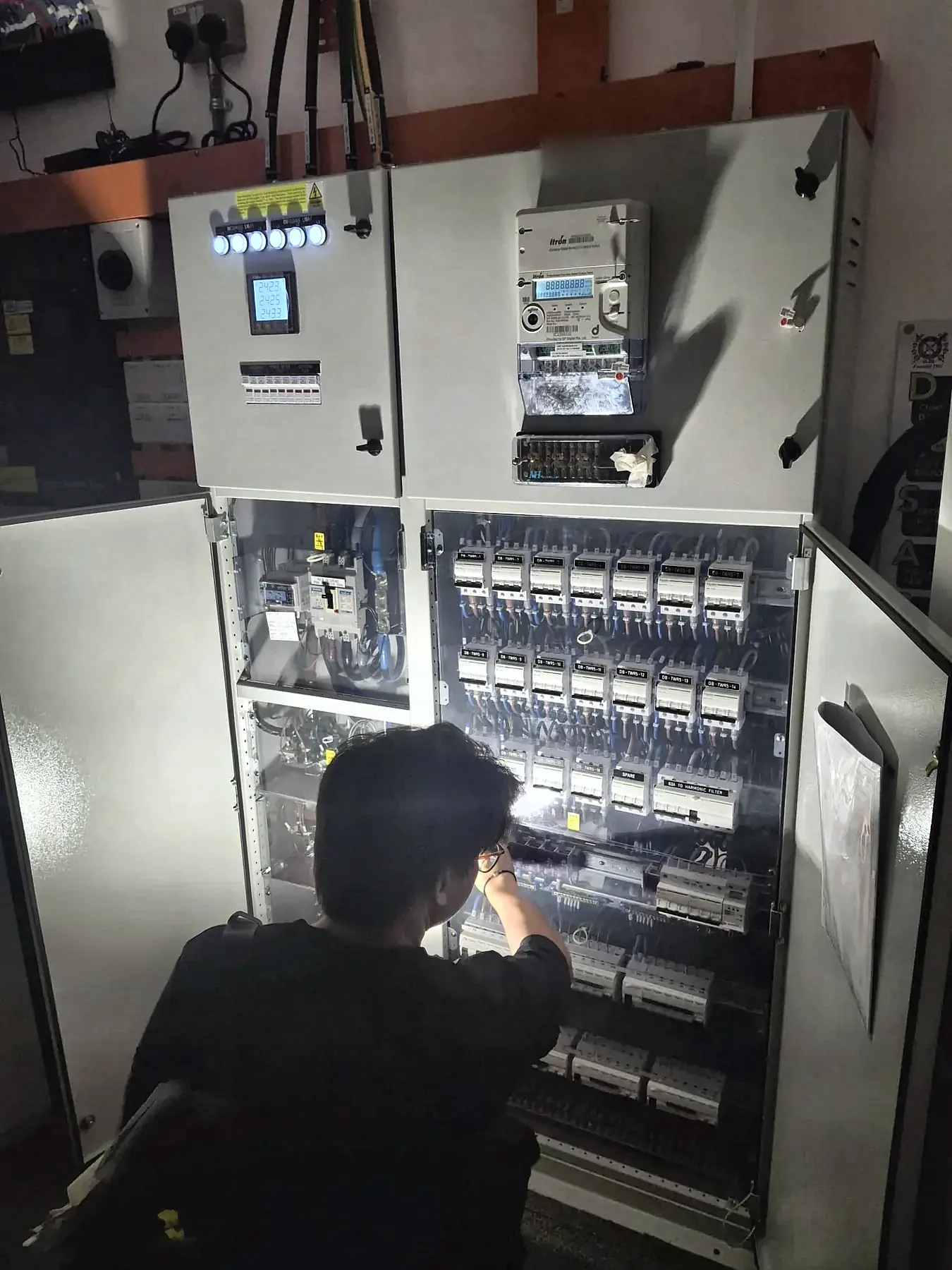
An LEW does not have unlimited scope — each licence class carries a load limit, and the class of the worker who endorses your installation has to cover it. These three are EMA’s own classes; the trade’s “Grade 8” is the Licensed Electrical Technician and “Grade 9” the Licensed Electrical Engineer. BSH holds a Grade 8 Licensed Electrical Worker in-house. We would rather state the limits up front than have you discover them at the point of endorsement.
Above our in-house class, we bring in the PE
Where an installation sits beyond the class of the BSH worker who would otherwise take it, we bring in our Professional Engineer / Grade 9 partner — a Licensed Electrical Engineer — to certify the work. That is a routing arrangement about who signs, not a decline — the job stays with BSH either way. The estimator flags it for you automatically once the figure you enter passes the operation limit, so you will know before you talk to us.
What it costs
EMA does not regulate what a Licensed Electrical Worker charges — “EMA does not regulate the rates of services offered by LEWs, as the amount of work varies from case to case” — and it advises consumers to obtain multiple quotations. That is exactly why almost nobody in this market publishes a number. We do.
Two separate costs — do not confuse them
The first three rows are EMA’s own fees. BSH passes them through at cost and never folds them into its service fee.
Check your inspection frequency first. The service fee above is per inspection, and EMA does not put every installation on an annual cycle. Multi-tenanted buildings and condominiums are inspected at least once every six months — so two a year, and the estimator does that arithmetic for you. Construction worksites are at least once per month, and trade fairs, mini-fairs and festive lighting are daily; those are priced as a servicing arrangement rather than a single visit, so talk to us and we will quote the actual cadence.
Statutory fees per EMA’s published fee FAQ and the EMA licence handbook. Replacement of a licence is S$21.40 incl. GST. Source · EMA on LEW rates
Put your incoming supply rating into the estimator and it will show you the price band immediately — before you pick up the phone.
Get my indicative priceHow the renewal runs
Tell us the basics
Incoming supply rating, premises address and your expiry date. Two minutes online.
Indicative price
You see a band immediately. A firm quote follows once our LEW has reviewed the details.
Inspect & test
On-site inspection and testing to SS 638 Chapter 62. Any defects are priced before we proceed.
Endorse & submit
Our LEW endorses the installation and we submit to EMA in time for the one-month deadline.
Already have an appointed LEW?
Then you are already covered — your existing Licensed Electrical Worker can carry out the renewal and there is nothing you need to change. EMA itself advises obtaining multiple quotations, so if you simply want a second number to compare against, or a straight answer to a question, we are glad to help with no obligation.
Frequently asked questions
When does the renewal application actually have to reach EMA?
Not later than one month prior to the date of expiry. That is Regulation 28(3) of the Electricity (Electrical Installations) Regulations, and it applies to the application — not to the inspection, and not to the expiry date itself. In practice EMA’s renewal notice tends to arrive around six weeks before expiry, which leaves roughly two weeks between the reminder landing and the statutory deadline. Since the LEW has to inspect, rectify anything found and endorse the installation before the application goes in, starting at about ten weeks out is comfortable and starting at four weeks out is not.
Which electrical installations need an EMA installation licence?
EMA states that three categories require a licence: non-domestic electrical installations with approved load exceeding 45kVA; electrical installations used in hazardous trades (for example businesses dealing with highly flammable materials, or construction work activities), regardless of approved load; and supply installations for non-domestic purposes, regardless of approved load. Whether a specific premises falls within these categories depends on its approved load, which is set with SP Services — it cannot be determined from the outside.
What does "approved load exceeding 45kVA" actually mean?
EMA defines approved load as the total electrical load that an electrical installation is designed to handle. EMA also publishes a useful equivalence: 45kVA is equivalent to 63A three-phase at 400 volts. Your incoming supply or main breaker rating is a reasonable starting point for a conversation, but it is not the same thing as your approved load — approved load is set with SP Services, so only your own records or an SP Services check will confirm it.
How often does the installation have to be inspected?
It depends entirely on the type of installation, and annual is only the baseline. EMA’s handbook says a licensed installation must be inspected and certified fit for operation by the appointed LEW at least once a year, then sets the required frequency in Table 3: construction worksites at least once per month; trade fairs, mini-fairs and festive lightings daily; multi-tenanted buildings, condominiums and the like at least once in six months; high voltage installations (supply at 6.6kV and above) on a schedule the appointed LEW works out, but at least once a year; and everything else annually, before the licence is renewed. Your appointed LEW may also recommend a higher frequency after assessing the operating conditions and wear and tear. So check which row you are in before comparing prices — a worksite quoted as one annual visit is being quoted a twelfth of the work.
Do domestic premises need an electrical installation licence?
No. EMA exempts all electrical and supply installations used exclusively for domestic purposes from the electrical installation licensing requirement. The licensing scheme does not apply to purely residential premises.
How long is an electrical installation licence valid for?
The Electricity Act leaves the duration to EMA’s discretion, and the Regulations state the licence is valid for the period stated on it unless earlier revoked or suspended. In practice EMA prices two terms in its fee schedule — 12 months and 3 months — so a 12-month term is the normal renewal cycle, with 3-month licences typically used for short-duration works. Always check the expiry date printed on your own licence.
What does EMA charge for the licence itself?
EMA’s own statutory fees are S$100 for a 12-month electrical installation licence and S$50 for a 3-month one. A supply installation licence is S$150 for 12 months and S$50 for 3 months. Replacing a licence is S$21.40 incl. GST. These are payable to EMA and are separate from any contractor or LEW service fee — BSH passes them through at cost and never folds them into its own fee.
How much should I pay an LEW for inspection and renewal?
EMA does not regulate LEW service rates — in its own words, "EMA does not regulate the rates of services offered by LEWs, as the amount of work varies from case to case" — and it advises consumers to obtain multiple quotations. That is why almost no contractor in Singapore publishes a price. BSH publishes indicative bands up front so you have a real number to compare against.
Who actually holds the licence — BSH or me?
You do. EMA issues the electrical installation licence to the owner or user of the installation — the licensee — and it is the licensee who has to hold it, display it at the main switchboard and keep it current. What EMA licenses on our side is the individual worker, not the company: EMA does not license electrical contractors at all, it licenses electrical workers in three classes. BSH’s role is to provide the appointed Licensed Electrical Worker who takes charge of your installation, carries out the inspection, and submits the application to EMA on your behalf. So the licence stays yours; the LEW appointment is what you are engaging us for.
Is there a size of installation your LEW cannot sign off?
Every LEW licence class carries a load limit: a Licensed Electrician up to 45kVA at 1000V and below; a Licensed Electrical Technician (the class the trade calls Grade 8) up to 150kVA for design and 500kVA for operation, also at 1000V and below; a Licensed Electrical Engineer (the trade’s Grade 9) has no load limit. Note that "Grade 8" and "Grade 9" are industry shorthand — the classes above are EMA’s own terms. BSH holds a Grade 8 Licensed Electrical Worker (Licensed Electrical Technician) in-house. Where an installation sits beyond that class, we bring in our Professional Engineer / Grade 9 partner — a Licensed Electrical Engineer — to certify. That is a routing arrangement, not a decline: the work stays with BSH either way, and the estimator flags it automatically once the figure you enter passes those limits.
I already have an appointed LEW. Should I still talk to BSH?
If you already have an appointed Licensed Electrical Worker, they can carry out your renewal and there is no need to change anything. EMA itself advises obtaining multiple quotations, so we are happy to be your second quote or to answer a question — with no obligation either way.
What happens during the periodic inspection?
A Licensed Electrical Worker inspects and tests the installation to SS 638 Chapter 62, which covers periodic inspection and testing of an installation already in service. (Chapter 61 is the different job — initial verification of a new installation before it is energised.) In practice that means a systematic visual check of the installation before instruments are connected, then testing — continuity of protective and bonding conductors, insulation resistance, earth-fault loop impedance and RCD operation among them — with the results recorded. Anything found is written up and priced before it is rectified, and the LEW endorses the installation once it is satisfactory.
Do not let the licence lapse
Remember the application is due a month before the date on the licence. Get an indicative price in two minutes, or set a free reminder for when it falls due.