
Type A vs Type B RCD for EV Chargers: Which Does Your Home Need?
EV chargers can introduce DC fault current a normal RCD may miss. The difference between Type A and Type B in plain English — and why most modern chargers let you use Type A.
On this page (5)
When you get an EV charger quote, somewhere in it sits a small line about the RCD — and whether it is "Type A" or "Type B". It is one of the few EV decisions that is genuinely about safety rather than speed, and it is worth understanding in one minute.
What an RCD actually does
A residual-current device (RCD, often an RCCB) constantly compares the current flowing out to the current flowing back. If some "leaks" to earth — through a fault, damaged insulation, or a person — the balance breaks and the RCD cuts power in milliseconds. It is the device that stops a shock from becoming fatal.
A circuit breaker (MCB) is a different job: it protects the cable from overload and short circuit. The RCD protects the person. A good board has both.
Type A vs Type B — the difference
RCDs are graded by the kind of fault current they can reliably detect:
- ›Type AC — only ordinary alternating current. Largely obsolete for modern circuits.
- ›Type A — alternating current and "pulsating" DC. This is the everyday standard for home socket and appliance circuits.
- ›Type B — everything Type A catches, plus smooth (pure) DC fault current. Used where electronics can produce clean DC leakage.

Why EV chargers raise the question
An EV charger contains power electronics. Under certain faults it can produce smooth DC leakage current — exactly the kind a Type A RCD is not designed to catch on its own. Left unaddressed, that can "blind" an ordinary RCD.
That is why the EV charger RCD question exists at all — and why getting it wrong is a real safety gap, not a paperwork detail.
So which do you actually need?
Under Singapore's wiring code (SS 638), the default protection for an EV charging circuit is Type B. But there is an important, very common exception: most modern chargers have built-in DC fault detection (a 6 mA DC sensor, sometimes called RDC-DD) baked into the unit. Where the charger provides that, a Type A RCD upstream is permitted — the charger itself covers the smooth-DC case.
In short: Type B by default; Type A where the charger has built-in 6 mA DC detection (most modern units do). The right answer depends on your specific charger, which is why we confirm it at the site survey rather than guessing.
Don't let anyone fit a plain Type AC or an unspecified RCD on an EV circuit. Either a Type B, or a Type A with a charger that has its own 6 mA DC detection — confirmed against your actual unit.
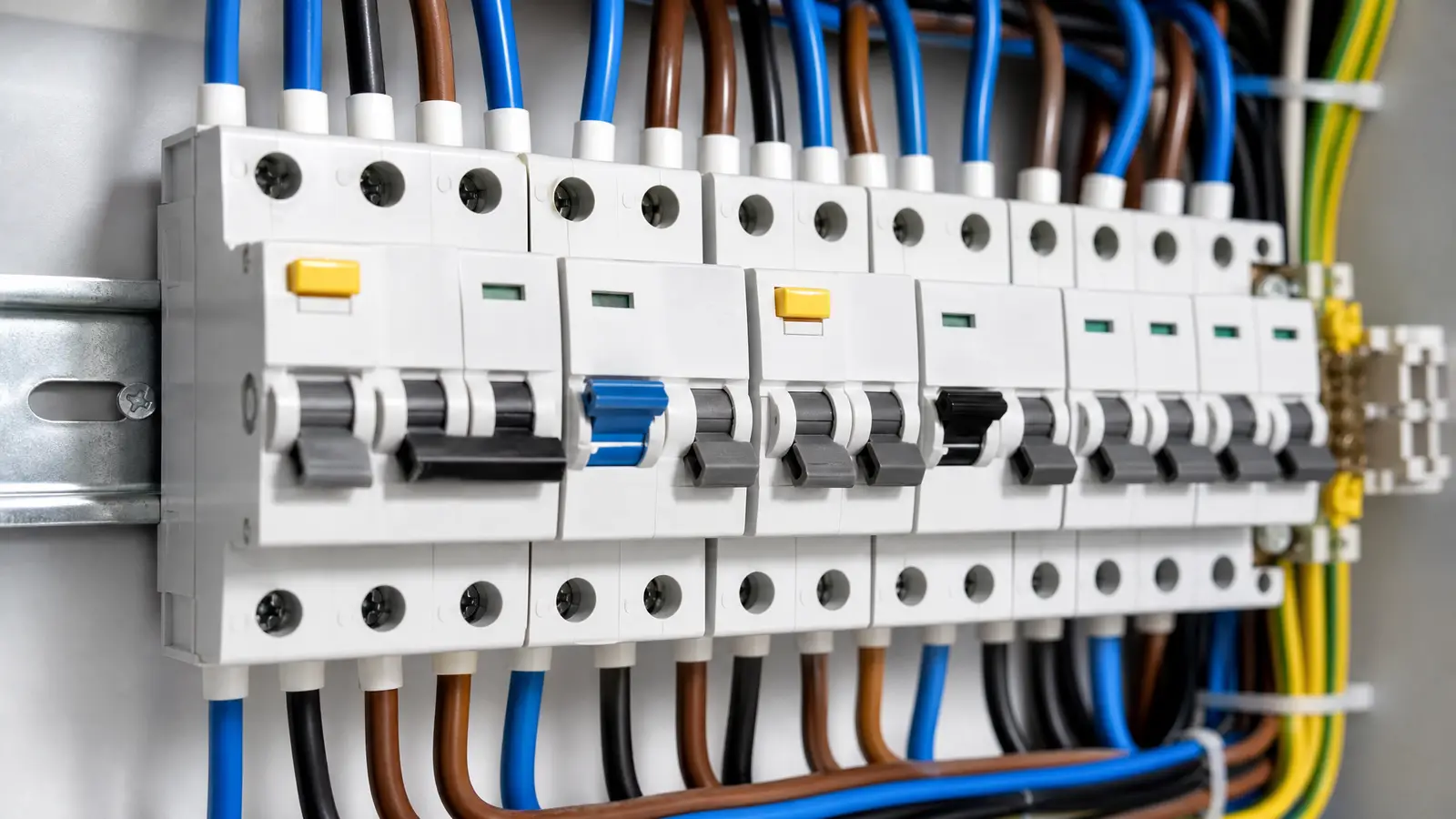
Where this lives in your board
The RCD and breakers sit together on the DIN rail. Tap the parts to see what each does.
Want the right protection on your EV circuit?
We confirm the correct RCD type against your actual charger and install it to SS 638 — certified by a Grade 8 LEW.
FAQ
Is Type B always required for an EV charger?
No. SS 638 makes Type B the default, but where the charger has built-in 6 mA DC fault detection (most modern units), a Type A RCD upstream is permitted. It depends on your specific charger.
How do I know if my charger has 6 mA DC detection?
It is in the charger datasheet (often listed as RDC-DD or "6 mA DC"). We check it against your unit at the survey and pick the compliant RCD accordingly.
Can I just use the RCD already in my consumer unit?
Often not — a general Type AC or shared RCD is not appropriate for an EV circuit. The charger should be on its own dedicated, correctly-protected circuit.
Is Type B much more expensive?
Type B RCDs cost more than Type A. Where your charger has its own DC detection, a Type A is both compliant and more economical — another reason it pays to check the unit.
How often should I test the RCD?
Press the test button roughly monthly; it should trip immediately. If it ever fails to trip, stop using the circuit and call a licensed electrician.
Still planning? WhatsApp our Grade 8 LEW your floor plan — free itemised estimate.
WhatsApp us