
What Is SS 638? Singapore's Wiring Code, Explained for Homeowners
The rulebook behind every safe electrical installation in Singapore — RCD protection, cable sizing, earthing, and who signs it off — without the jargon.
On this page (5)
"Wired to SS 638" turns up on quotes, certificates and websites (ours included). It is not marketing jargon — it is the rulebook your home's electrical work is legally measured against. Here is what it means, without the technical detail you do not need.
What SS 638 is
SS 638 is Singapore's Code of Practice for Electrical Installations — the national standard that defines how fixed electrical work must be designed, protected, earthed and tested. It replaced the older CP 5 code and is the baseline every Licensed Electrical Worker (LEW) signs against.
Think of it as the building code, but for the wiring you cannot see: it sets the safe limits so that a finished installation protects the people using it.
What it covers (in plain English)
Without getting into the tables and clauses, SS 638 is what makes an installation safe rather than just functional:
- ›RCD protection — life-saving residual-current protection on the circuits that need it, so a fault trips before it can hurt someone.
- ›Cable sizing & voltage drop — cables rated for the current they carry and the distance they run, so they never overheat or starve an appliance.
- ›Earthing & bonding — a deliberate safe path for fault current, and metalwork bonded so it cannot become live.
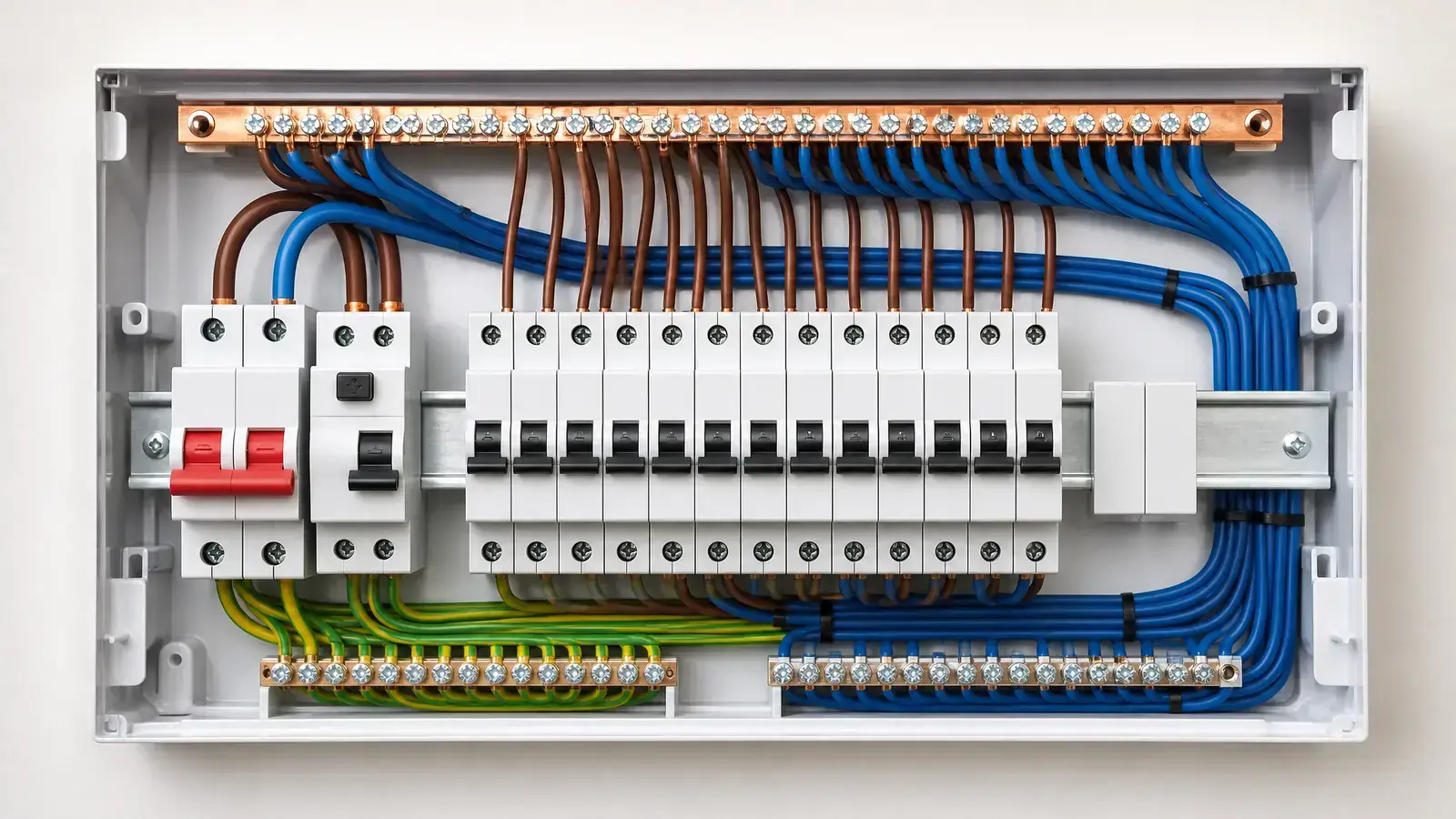
- ›Circuit separation & a proper board — each circuit on its own correctly-rated breaker in a labelled distribution board.
- ›Testing & certification — every circuit tested and signed off before it is energised.
When SS 638 applies to you
Effectively any time fixed wiring is added or altered — not just big rewires. Adding power points, moving the distribution board, wiring an EV charger, a renovation, a new aircon or water-heater circuit — all of it is "electrical installation work" that must meet SS 638 and be done under an LEW.
Changing a light fitting or a socket faceplate is maintenance; anything that touches the circuits behind them is not.
Who signs it off — and why it matters
Compliance with SS 638 is certified by a Licensed Electrical Worker; the hands-on work is done by trained electricians under that LEW's supervision. That signature is what makes the installation insurable and lawful.
The reason it matters beyond ticking a box: non-compliant wiring is invisible until it fails — and an insurer can decline a fire or damage claim if the electrical work was not done to code by a licensed worker.
What SS 638 looks like in your board
Most of SS 638 lives inside the distribution board. Tap the parts to see what the code is really asking for.
Want work that is genuinely to SS 638?
Every BSH installation is wired to SS 638 and certified by a Grade 8 LEW — homes, renovations and commercial alike.
FAQ
Is SS 638 the law?
It is the national Code of Practice that electrical installation work is required to meet, and that a Licensed Electrical Worker certifies against under the Electricity Act. In practice, compliant work means SS 638 work.
What happened to CP 5?
SS 638 superseded the older CP 5 code. If you see "CP 5" on very old documentation, SS 638 is its current replacement.
Does a small renovation really need to follow SS 638?
Yes. Adding points, circuits or moving the board is installation work and must meet the code and be certified by an LEW — even in a home.
How do I know my contractor actually followed it?
Ask for the test certificate and confirm the work is under a Licensed Electrical Worker. A compliant board is RCD-protected, neatly wired and labelled.
Can I see the full standard?
SS 638 is a paid Singapore Standard from the Singapore Standards eShop. For your project, your LEW interprets the relevant parts — you do not need to buy it.
Still planning? WhatsApp our Grade 8 LEW your floor plan — free itemised estimate.
WhatsApp us