
Renovating an HDB BTO or Condo? Why the Electrical Work Needs a Licensed Electrician
Your interior designer bundles 'electrical' into the package — but who actually pulls the wires? In Singapore, renovation electrical work must be done under a Licensed Electrical Worker, by trained electricians. Here's why that matters for your safety, your insurance and your handover.
On this page (8)
A new BTO or a freshly handed-over condo unit is a blank canvas — and your interior designer (ID) or renovation contractor usually takes care of everything: hacking, carpentry, painting, and somewhere in that quote, a single line that just says "electrical works". It is easy to assume that part is handled. The question worth asking is: who is actually pulling the wires behind your feature wall — and are they licensed to?
Your renovation's electrical work is "installation work" — by law
Adding power points, moving the distribution board (DB), wiring downlights and cove lighting, running dedicated circuits for your aircon, water heater and induction hob — these are not handyman jobs. Under Singapore's Electricity Act and the Electricity (Electrical Installations) Regulations, this is electrical installation work, and it must be carried out under a Licensed Electrical Worker (LEW) and wired to the national code, SS 638.
The LEW is the EMA-licensed professional who is accountable for the installation being safe and compliant. The hands-on work is done by trained electricians working under that LEW's supervision — not by a general renovation worker who happens to be on site.
An LEW cannot physically stand over every socket. What matters is that the people pulling your wires are electrically trained, working to the LEW's methods, and that the LEW certifies the result. A general "reno worker" tapping into a live circuit is neither trained nor accountable — and that is where problems start.
An LEW is not the same as "the electrical guy" on a reno crew
Every renovation package has someone who does "the electrical". But there is a world of difference between a licensed, accountable installation and wires that merely work on handover day.
- ›A Licensed Electrical Worker holds an EMA licence to take charge of and certify installations. Not every electrician is an LEW — and a general renovation worker is usually neither.
- ›Trained electricians do the physical wiring to a defined standard, under the LEW's supervision.
- ›The result is tested, certified and documented — so there is a paper trail, not just a verbal promise.
What goes wrong when the wrong hands do the wiring
Bad renovation wiring rarely fails on day one. It fails months later — and the failures are exactly the ones SS 638 is written to prevent:
- ›No RCD, or the wrong type — leaving you without the 30 mA protection that trips before a shock becomes fatal.
- ›Overloaded circuits — too many high-draw appliances (oven, kettle, aircon) sharing one circuit, tripping or overheating.
- ›Undersized or poorly-terminated cable — loose terminations heat up, and heat behind a plastered wall is how electrical fires start.
- ›An unbalanced or unlabelled DB — nobody can tell which breaker does what when something trips at midnight.
- ›Buried, inaccessible junctions and no testing — faults you cannot find, and a handover with no certificate.
Home insurers expect electrical work to be done by a licensed worker and to comply with the code. Non-compliant or unlicensed wiring can be grounds to reduce or reject a fire or damage claim — long after the renovation invoice is forgotten.
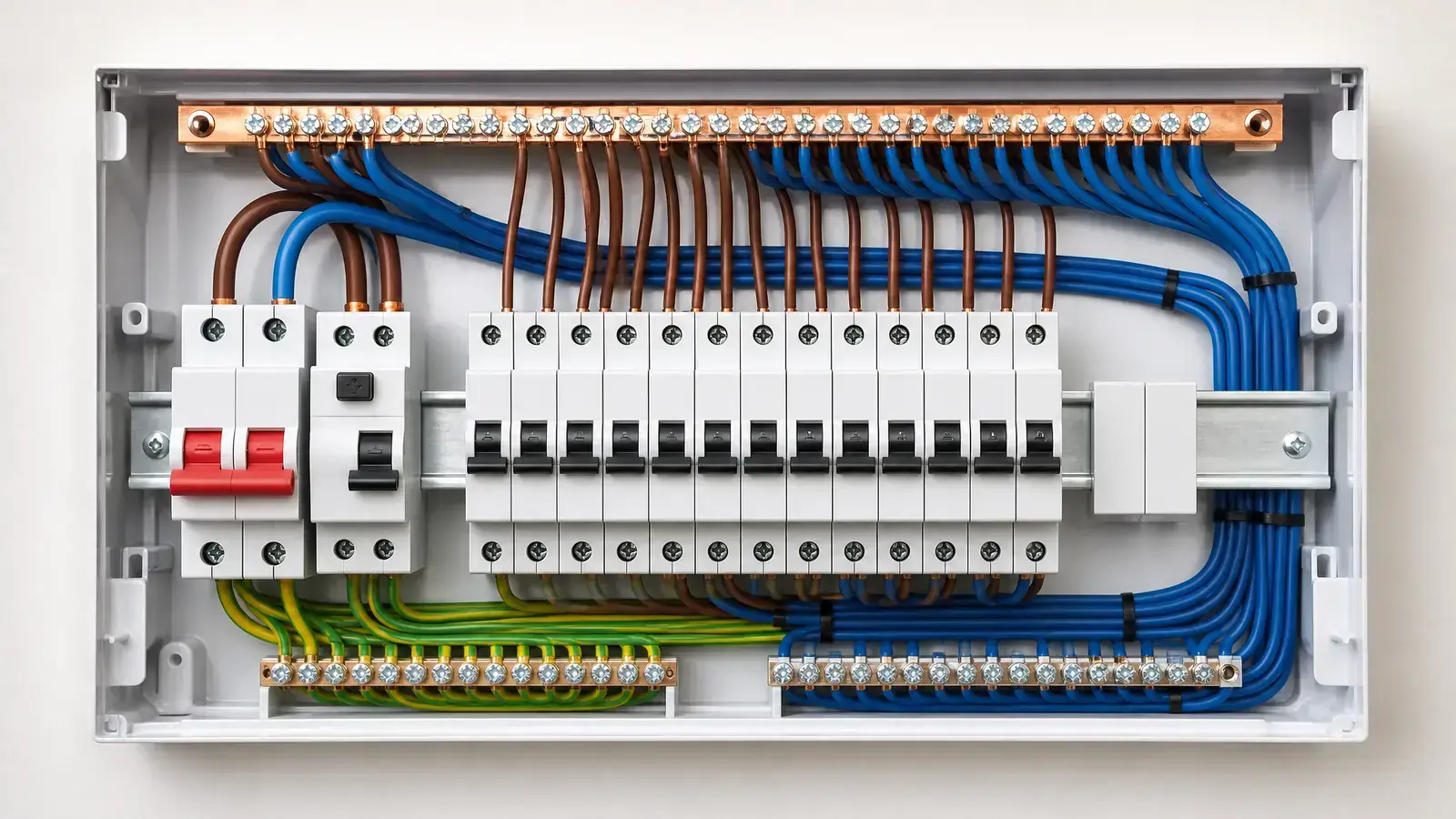
What a compliant board actually looks like
Most of what a licensed installation gets right sits hidden behind a blank cover. Here is the same board, opened up and explained — tap each part to see what it does, and where an unlicensed job tends to cut the corner.
HDB BTO and condo: the approvals you actually need
Beyond safety, there are rules specific to where you live.
- ›HDB (including BTO): electrical works must be done by an EMA-licensed electrical worker, and many works require an HDB renovation permit — normally filed by your renovation contractor or ID. Unauthorised electrical works can hold up your renovation and your handover.
- ›Condominiums: the MCST or managing agent controls renovation works — typically requiring a permit, a licensed contractor, insurance and agreed working hours. The electrical scope still has to meet SS 638.
Your ID or main contractor normally files the HDB or MCST paperwork. But it is your home, and your name on the handover. It is completely fair to ask to see that the electrical works are under an LEW and will be certified.
Why "done right" is worth it — well beyond passing inspection
Bringing in a licensed electrician for your renovation is not red tape. It protects the people who live there and the value of the home.
- ›Safety: proper RCD protection, correctly-rated circuits and tidy terminations — the things that prevent shocks and fires.
- ›Insurance and resale: compliant, certified work that stands up to a claim and to a buyer's checks.
- ›Future loads: a DB and circuits planned for tomorrow's aircon, induction hob and EV charger — not maxed out on day one.
- ›Peace of mind: a tested, labelled installation with a certificate, not a mystery behind the wall.
What to ask before you sign the renovation package
You do not need to be an electrician to protect yourself. Four questions separate the professionals from the rest:
- ›"Will the electrical works be done under a Licensed Electrical Worker, and will I get the certificate?"
- ›"Is the new DB RCD-protected and wired to SS 638?"
- ›"Are the aircon, water heater and kitchen appliances on dedicated, correctly-rated circuits?"
- ›"Who is actually doing the wiring — trained electricians, or general workers?"
How BSH does it
BSH is an electrical contractor with Grade 8 LEWs in-house. For HDB, BTO and condo renovations we do the electrical scope the right way: trained electricians working under our LEW's supervision and certification, wired to SS 638, with an RCD-protected DB, every circuit tested and the board clearly labelled.
We coordinate directly with your ID or main contractor so the works fit the renovation programme — and you get a clean, certified handover you can rely on.
Renovating soon? Get the electrical done right.
We coordinate with your ID or contractor and do the electrical scope under our Grade 8 LEW — wired to SS 638, tested and certified.
FAQ
Do I really need a licensed electrician for my HDB BTO renovation?
Yes. Rewiring, adding power points, moving the DB and running appliance circuits are electrical installation work that, in Singapore, must be carried out under a Licensed Electrical Worker and wired to SS 638 — even in a home. Many HDB works also need a renovation permit.
My interior designer says they'll handle the electrical — is that enough?
It can be, provided the electrical scope is sub-contracted to an EMA-licensed electrical worker who certifies the work. Ask your ID to confirm it is done under an LEW and that you'll receive the test certificate. If the answer is vague, treat that as a red flag.
Can a general renovation worker do my wiring?
Pulling wires, terminating circuits and working on your DB should be done by trained electricians under an LEW's supervision — not a general renovation worker. The LEW is the licensed, accountable person who certifies that it is safe.
What is the difference between an electrician and an LEW?
All LEWs are competent electricians, but an LEW additionally holds an EMA licence to take charge of and certify installations. Not every electrician is an LEW — see our separate guide on when the law requires one.
Does a condo renovation need approval for electrical work?
Usually yes. The MCST or managing agent requires a renovation permit and a licensed contractor, often with insurance and set working hours. The electrical works must still meet SS 638.
Will I get a certificate for the electrical work?
You should. A licensed installation is tested and certified — keep the certificate, as it matters for insurance, future works and resale.
Still planning? WhatsApp our Grade 8 LEW your floor plan — free itemised estimate.
WhatsApp us