Japan & Korea Lighting Ecosystems
A deep dive into how Japan invented modern indoor lighting design and how Korea industrialised the platforms that make it shareable — and what a Singapore HDB/condo electrical contractor can extract from both. Pro brands, design studios, consumer platforms, e-commerce UX, K-drama tropes, and the visual DNA of two East Asian aesthetics that Singapore homeowners increasingly look to.
Author: Scan for BSH bshsg.com · File: 06-japan-korea.html · Date: 2026-05-16 · Sister docs: 01–04 dialux-study/ · Status: Research synthesis, not a customer-facing document
~25
Brands & platforms profiled
6.0 M
RoomClip user photos (JP)
20 M
Ohou (오늘의집) app downloads (KR)
1.3 M
Ohou 3D Interior users (May 2025)
Japan — the home of comfortable indoor light
Junichiro Tanizaki wrote In Praise of Shadows in 1933. Ninety years later, the whole Japanese lighting industry still designs around it.
Why Japan matters
Japan is the world reference for what "comfortable indoor light" means at a residential level. Three structural facts drive this:
- Compact homes, layered light: Tokyo apartments are 60–80 m² on average. Single overhead fluorescent tubes were standard for decades; the cultural backlash produced 多灯分散 (tatō bunsan, "many lamps, distributed") as the dominant doctrine.
- Domestic LED brands invested in residential simulation a decade before Western brands: Koizumi, Panasonic, Daiko, Endo and Toshiba all run free consumer-facing lighting simulators on their corporate sites — not the same as DIALux or Relux, but mass-market consumer tools.
- Public broadcaster reinforcement: NHK has run multiple "あさイチ" (Asaichi) lighting specials, plus a five-episode 2021 drama called ハルカの光 (Haruka no Hikari) that featured one famous designer lamp per episode. This is national-channel lighting education.
1800K
2700K
3000K
4000K
5000K
6500K
Japanese residential standard tilts strongly to 2700K–3000K (warm white, 電球色 denkyū-shoku). 5000K (昼白色 chū-haku-shoku) and 6500K (昼光色 chū-kō-shoku) are reserved for task zones — kitchens, study desks, makeup mirrors.
JPPro brands with consumer-facing visualization tools
Koizumi Lighting コイズミ照明 — Virtual Lighting Simulation
Free consumer tool
Browser-based
LDK + workspace
2700K / 3500K / 5000K toggle

Koizumi's residential lighting page. Live tool at /jyutaku/lightingsimulation/.
What they do: Koizumi (founded 1940, Osaka) is one of Japan's "big four" residential lighting brands. Their consumer simulator lets a homeowner pick LDK or office workspace, then toggle floor colour (4 options), wall colour (3 options), color temperature (2700K/3500K/5000K), and "life scene" (breakfast, focused work, relaxing, movie-watching). The tool then shows: (1) the rendered room, (2) a brightness heatmap, (3) a 配灯図 (haitō-zu, fixture-layout diagram) and (4) a list of every fixture used with model numbers. It's a packaged customer-education funnel — not a true ray-tracing tool, but it teaches the consumer the relationship between scene-mood-fixture-Kelvin without any installer in the loop.
Lesson for BSH: The simulator is not selling brightness — it's selling "life scenes." A Singapore HDB buyer doesn't know what 300 lux feels like; they know they want "breakfast vibes" or "Friday movie night." Re-frame bshsg.com fixture pages around 4–5 named life scenes per room type.
★★★★★ Adaptability to HDB: extremely high — Singapore HDB is closer to Japanese 60–80 m² than to American or European interiors.
Panasonic Lighting Japan パナソニック照明
Color performance simulator
Sign lighting simulator
Lightning Flow BIM tool
VIRTUAL STAGE MIERVA (VR sales centre)
What they do: Panasonic operates a multi-tier lighting toolset: a free カラー演出シミュレーション (colour direction simulator) for wall-wash effects, a 看板照明シミュレーション for sign lighting, and the professional Lightning Flow for BIM-integrated 3D lighting checks. Their B2C residential side runs through Panasonic Anchor, with a separate "Residence" solutions site. Most notably, Panasonic built VIRTUAL STAGE MIERVA — a VR walkthrough system commissioned for the HARUMI FLAG athlete village condominium sales centre, letting buyers experience the lit interior before construction completed.
Lesson for BSH: Panasonic's MIERVA model is exactly what an HDB BTO buyer wants — they're buying off-plan and can't see the unit. BSH should pitch developers on a "virtual lit walkthrough" service that locks in the fixture spec at sales-launch stage. Lighting becomes a sales tool, not a renovation afterthought.
★★★★★ Adaptability: high for BSH's commercial / developer-facing side; medium for direct-to-HDB-owner.
Daiko Electric 大光電機 (DAIKO)
Founded 1926
TACT design dept. — 100 creators
D.LIGHTING STYLE 2026 catalog
In-store simulator
What they do: Daiko's homepage tagline reads 「何気ない日常の光を 特別なものへ」 ("turning everyday light into something special"). They run a 100-person internal design department (TACT), publish an annual residential catalog (D.LIGHTING STYLE), and offer in-store 照明シミュレーション at showrooms plus a スイッチ適合確認ナビ (switch-compatibility navigator) so consumers verify dimmer + fixture pairings before purchase. Image asset structure follows www2.lighting-daiko.co.jp/images/*.webp and they push the residential category by life-stage: 住宅 (house), マンション (condo).
Lesson for BSH: The switch-compatibility navigator is a brilliant defensive UX — it kills the #1 post-sale complaint (the dimmer flickers / doesn't turn off properly). BSH should publish a public "will this dimmer work with this LED?" tool. Singapore's electrical dimmer market is fragmented (Schneider, ABB, Legrand, Clipsal); a free compatibility checker is a lead magnet that no competitor offers.
★★★★★
Endo Lighting 遠藤照明 — AIかんたん照明シミュレーション
Founded 1967 Osaka
Synca tunable LED
Free BIM objects on BIMobject
AI lighting simulator
What they do: Endo was Japan's first publicly-listed lighting manufacturer. They are aggressive on the technical side: Synca tunable LEDs with 121 color-rendering presets, the Synca × Smart LEDZ Base circadian system, free BIM objects published on BIMobject (SketchUp, Revit, Vectorworks, ArchiCAD) and an AI lighting simulator branded AIかんたん照明シミュレーション ("AI-easy lighting simulation"). The virtual showroom at endolighting-virtualconcepts.com walks consumers through lit residential scenes interactively.
Lesson for BSH: Free BIM objects are a wholesale-channel weapon. Every Singapore architect spec'ing fixtures wants Revit families. If BSH publishes its imported-fixture catalog as free Revit + SketchUp downloads on a public URL, the bshsg.com SKU gets locked into specs from day one. This is a $0 marketing tool with high lock-in.
★★★★★
Yamagiwa ヤマギワ — the high-design heritage brand
Founded 1923
"The Art of Lighting"
Frank Lloyd Wright license
Toyo Ito Mayuhana
Tokujin Yoshioka Tear Drop
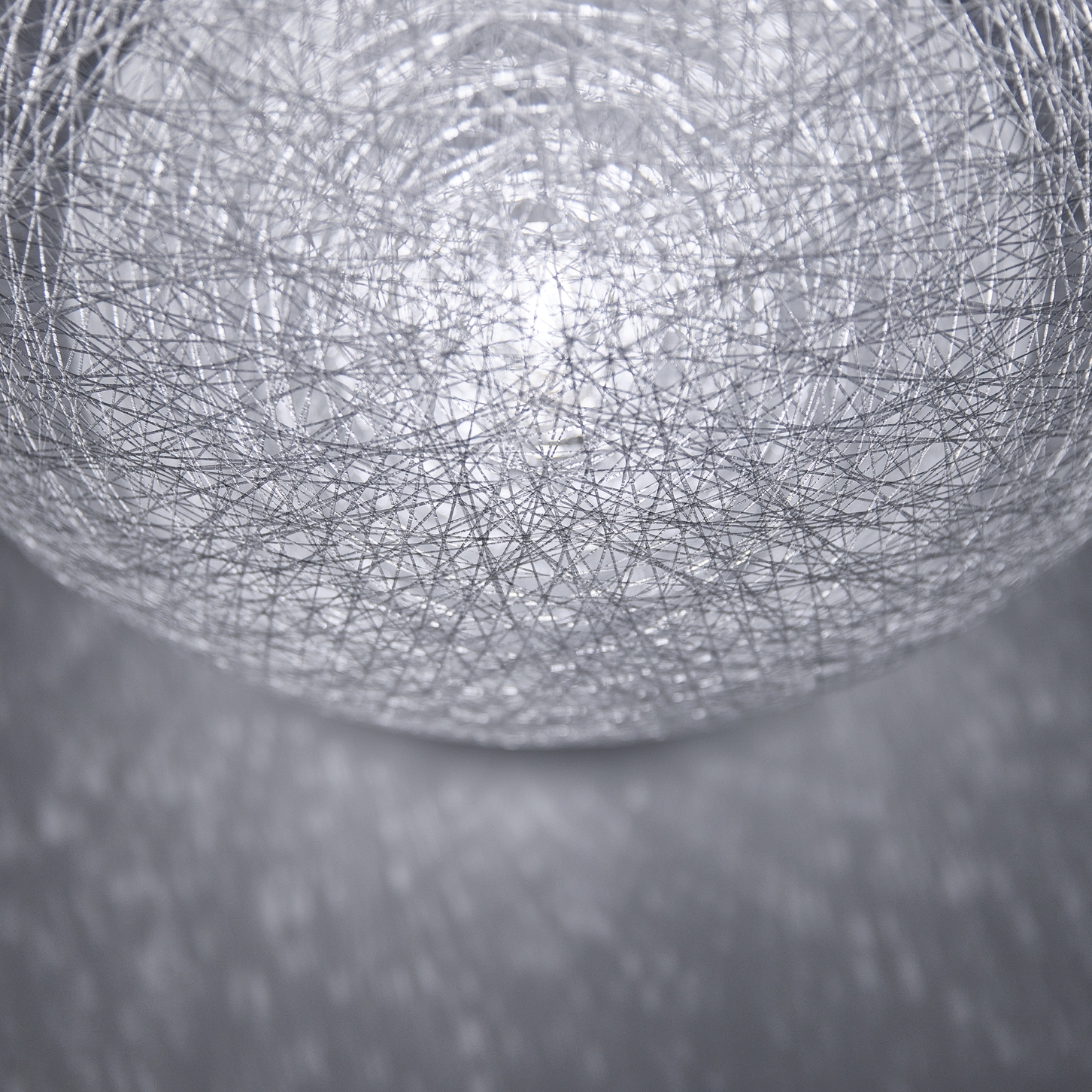
Mayuhana series by Toyo Ito for Yamagiwa — handmade cocoons of spun fibreglass thread. The name combines 繭 (cocoon) + 花 (flower).
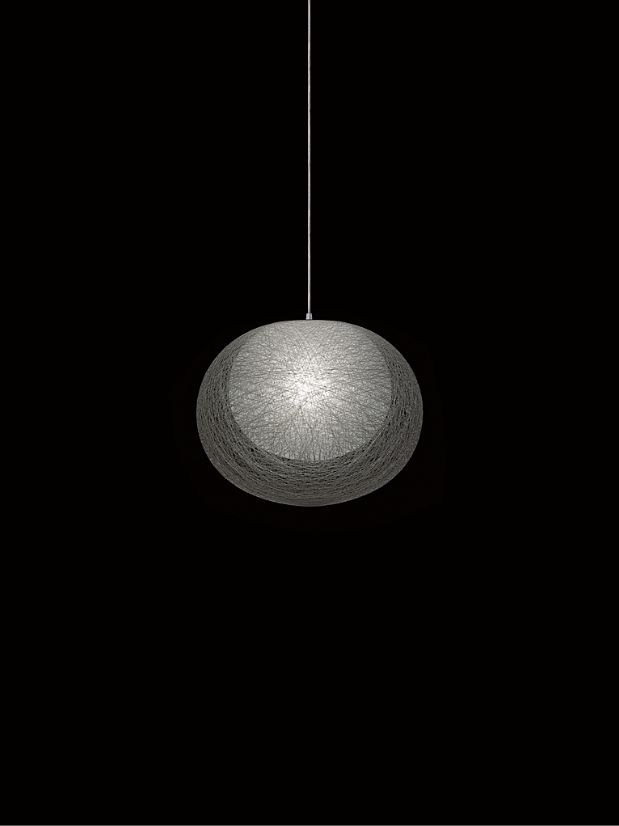
Mayuhana Oval Pendant Φ470 (PE112). 30+ sizes/forms across pendants, floor lamps, and table lamps.
What they do: Yamagiwa is the Japanese lighting world's equivalent of Wedgwood — a hundred-year-old brand that pairs handcraft with marquee architect collaborations. Active partnerships include Frank Lloyd Wright (TALIESIN, ROBIE), Toyo Ito (MAYUHANA), Hans-Agne Jakobsson (JAKOBSSON), Tokujin Yoshioka (TEAR DROP) and Shiro Kuramata (K-SERIES). The Mayuhana series alone has 30+ variants and explicitly references Tanizaki's In Praise of Shadows: "soft light reminiscent of traditional paper lanterns known as bonbori."
Lesson for BSH: Yamagiwa's whole brand is built on provenance + designer attribution. Every fixture on bshsg.com should answer: who designed this and why does it look this way? Even cheap LED downlights have a story (cf. SS 638 backstory, eco-warm-white biology, Schneider Avatar mounting plate). BSH currently presents fixtures as commodity SKUs — that's the cheapest possible framing.
★★★★★ Adaptability: medium — most HDB buyers won't buy a $4000 Mayuhana, but the storytelling pattern transfers cleanly to $80–$300 statement pendants.
Iris Ohyama アイリスオーヤマ — mass-market voice-controlled LED
"S-Tria" — lightest fixture in industry
Voice-control direct (no Wi-Fi)
Alexa / Google Home compatible models
Metal Circuit tech
What they do: Iris Ohyama is the Uniqlo of Japanese lighting — mass-market, Amazon-heavy, value-priced. Their ceiling-light range is sized in 畳 (tatami mats): 6畳, 8畳, 12畳. The CL8DL-IDR (8畳, indirect lighting, dimmable, toning) is the bestseller pattern. Crucially, they pioneered voice-control without Wi-Fi — speak directly to the fixture, no router required. Higher-tier models (CL8DL-6.0UAIT) bridge to Amazon Echo / Google Home. The Metal Circuit chip distribution explicitly markets "no glare, even illumination" as a benefit over older fluorescent + diffuser fixtures.
Lesson for BSH: Sizing fixtures by room area in standard local units is psychologically powerful. Japan uses tatami (6畳 = ~10 m²); Korea uses pyeong (1坪 = ~3.3 m²). Singapore should use HDB-room-type sizing: "2-room flexi master bedroom", "4-room living/dining", "5-room balcony alcove." This is BSH's biggest content opportunity — a "fixture sized for your HDB layout" filter.
★★★★★
Toshiba Lighting 東芝ライテック
Made Japan's first incandescent bulb (1890)
Smart RGB ceiling lights
Bluetooth app control
What they do: Toshiba's lighting division (Toshiba Lighting & Technology Corp.) traces back to Japan's first incandescent bulb in 1890. Today the residential range emphasizes 3-color flush ceilings (Daylight / Warm White / Cool White + RGB option) with Bluetooth phone control. They also produce solar-powered outdoor units (Solar Smart ORCA) and are positioned more as a legacy/value brand than a design brand.
Lesson for BSH: Toshiba's 3-color toggle (3000K / 4000K / 6500K from one fixture) is genuinely useful for HDB — one fixture covers reading, movie nights, and morning prep. BSH should stock and merchandise CCT-tunable fixtures more aggressively than fixed-temperature ones.
★★★★★
Maxray マックスレイ (USHIO Lighting subsidiary)
Founded 1957, Osaka
Commercial/retail focus
"The design company"
USHIO Lighting subsidiary (2015)
What they do: Maxray is the design-led commercial spec brand — retail stores, restaurants, ryokan inns, hotels. Spotlights, pendants, brackets and downlights for shops where the fixture itself is part of the product display. Acquired by USHIO Lighting in 2015 and now operates as USHIO's design-spec arm.
Lesson for BSH: Maxray's positioning ("design company that happens to make lights") is the right framing for BSH's commercial-fit-out side. The brand promises commercial clients that lighting is part of the merchandising, not an infrastructure afterthought.
★★★★★
JPArchitectural lighting design studios
Lighting Planners Associates (LPA) — Kaoru Mende
Founded 1990
60 specialists, 4 offices
700+ projects in 25 years
Singapore office active
What they do: Kaoru Mende's LPA is the most internationally influential Japanese lighting practice. Offices in Tokyo, Singapore, Hong Kong, and Shenzhen. Singapore portfolio is dense: Gardens by the Bay, Victoria Concert Hall, National Gallery Singapore. Plus Tokyo International Forum, Sendai Mediatheque, Aman Tokyo. Awards: IES Award of Distinction, IALD Radiance Award, Japan Culture Design Award, Singapore President's Design Award.
Lesson for BSH: LPA literally won Singapore's President's Design Award and has lit Singapore's most-visited public buildings. The fact that the architectural-lighting story BSH should tell is already trusted by Singapore institutions is leverage. Reference LPA-lit buildings ("the same lighting principles behind Gardens by the Bay") in BSH consumer education content.
★★★★★
Sirius Lighting Office
Established 2005 Tokyo
Hong Kong office 2011
IALD Radiance Award (Toranomon Hills)
What they do: "The smallest unit of light is a star. Every light is made of countless stars." Sirius (named after the brightest star) won the IALD Radiance Award for Toranomon Hills Business Tower. Portfolio includes the Museum of Oriental Ceramics Osaka and JP Tower Osaka. Residential and commercial.
Lesson for BSH: Naming a brand around a single design philosophy ("layered stars") is more memorable than naming it after the founder. BSH might consider product-line names that carry a metaphor (e.g., "Hinomaru" series for warm-white commercial; "Kyō" 京 series for premium residential).
Reiko Chikada Lighting Design
Founded Tokyo 1986IALD 2007IESNA Edwin F. Guth 2006
What they do: Reiko Chikada trained 15 years under Motoko Ishii (Japan's first internationally famous lighting designer) before founding her own studio in 1986. 45+ years of city, hotel, museum, hospital, landscape and residential lighting. The studio is a benchmark for Japanese luxury-residential lighting.
Lesson for BSH: The "trained under [legendary mentor]" lineage is powerful in design. BSH should publicize that its key spec staff trained under specific named manufacturers' apprentice programs (Schneider, Philips, etc.).
Ichiro Iwasaki — product designer
What he does: Tokyo-based product designer (founded Iwasaki Design Studio 1995). Designed Vibia's Flat, Pin, and Tube lighting systems. Philosophy: "improvement of our intimate spaces and everyday rituals." Won iF Gold, Red Dot Best of the Best, Silver German Design Award.
Lesson for BSH: Iwasaki's TUBE system — a single light source split via tube network to multiple shades — is exactly the kind of modular customizable fixture HDB owners want for irregular living-room shapes. Worth importing the concept (or the product itself).
JPAkari — Isamu Noguchi & the Gifu lantern tradition
Akari Light Sculptures by Isamu Noguchi (Ozeki, Gifu, since 1951)
"Akari" = light + weightlessness
Mulberry-bark washi paper
Bamboo ribbing
Made by Ozeki, Gifu since 1951
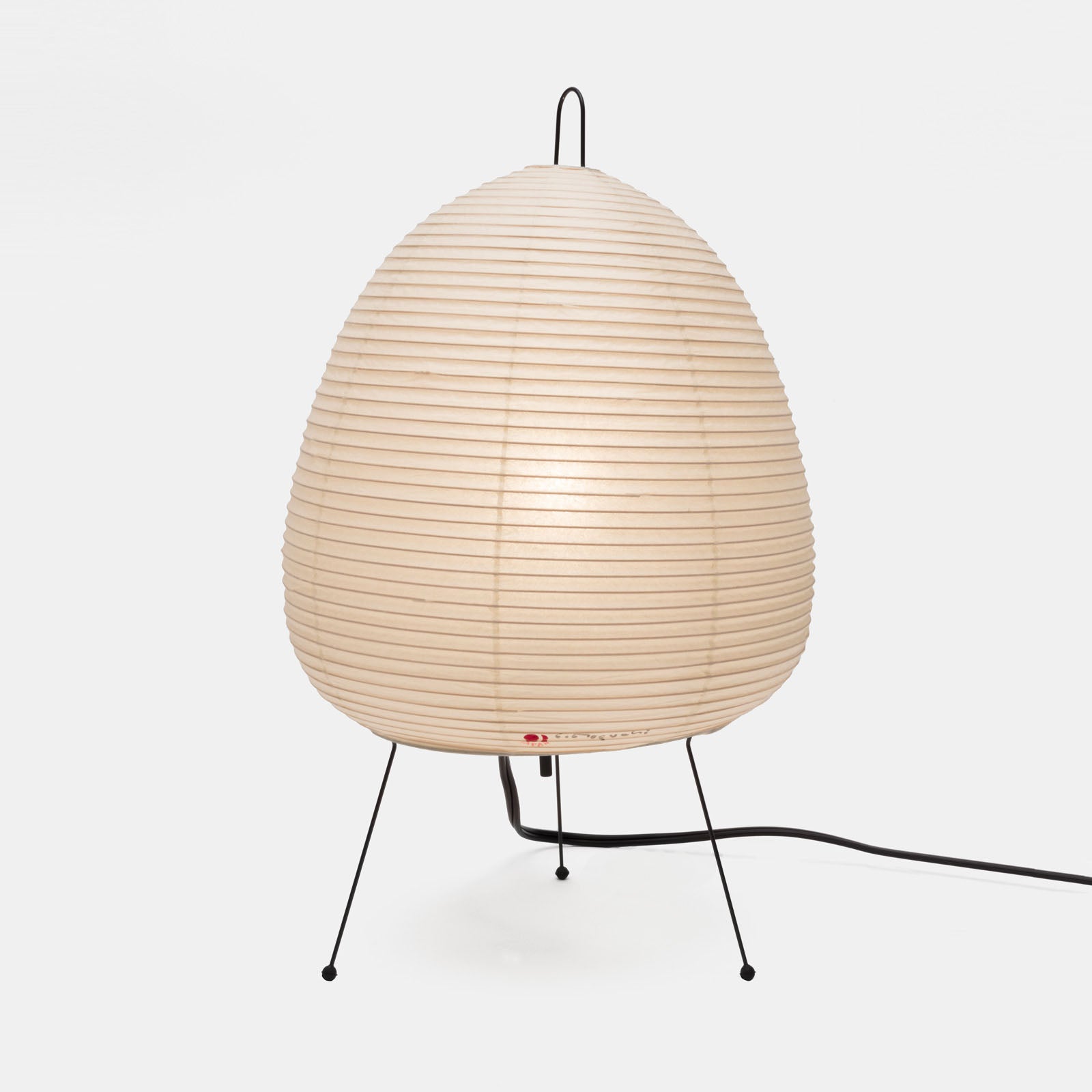
Akari 1A — the original 1951 table lamp design. Currently "8 left" inventory note suggests these are made in batches by hand.

UF4-J1 floor lamp. The UF series is more architectural — vertical, gallery-scale.
What they are: In 1951 Noguchi visited Gifu (Japan's lantern-making town since the Edo period) and re-designed the traditional chōchin lantern as a modernist sculpture. 70+ years later, every piece is still made by hand at the Ozeki workshop in Gifu — mulberry-bark washi paper laid in strips over a bamboo armature held by a hidden steel frame. The product line is in three categories: Table (1A–4A), Ceiling (15A–125F), Floor (10A, UF3–UF5). Noguchi described them as "poetic, ephemeral, and tentative."
Lesson for BSH: The Akari is the canonical Japanese statement light — every HDB owner who's into Japandi has at least seen it on Pinterest. BSH should either (a) stock a licensed authentic Akari, or (b) explicitly position a Japanese-paper alternative with the same heritage story. Either way the narrative matters: "the lamp Noguchi designed at the Gifu lantern factory in 1951 — and they still make it the same way."
★★★★★
RoomClip ルームクリップ — Japan's interior-photo SNS
Founded 2011 by Masahiko Takashige
6+ million photos
Audience: women 30s–40s
RoomClip Shopping (2021)
RoomClip Business B2B SaaS
Backed by NTT DOCOMO Ventures
What it is: RoomClip is the Pinterest/Instagram hybrid for Japanese home interiors. Users post photos of real rooms tagged with brand names (IKEA, Muji, Eames) and specific products. Six-million-plus photos. Founded after the 2011 Tōhoku earthquake by Takashige to give people "a space to find creativity and joy in their daily living environments." The CDN structure is cdn.roomclip.jp/photo/640/[hash].jpg for photos and cdn.roomclip.jp/user/64/[hash].jpg for avatars. Site assets live at web-assets.roomclip.jp/rc_next_web/.
Business model — multifaceted: (1) RoomClip Business — D2C SaaS for furniture, home appliance, building-material brands. They get user-data analytics, run promotions, and engage the targeted audience. (2) RoomClip Shopping (launched March 2021) — social commerce; tap a photo, buy the items. (3) Licensing user photos for corporate marketing materials. Annual RoomClip住文化研究所トレンドレポート (Culture Research Institute Trend Report 2024–2025) sets industry conversation.
Lesson for BSH: RoomClip is the model BSH should aspire to as a community-driven content layer on top of bshsg.com. Singapore HDB owners post photos of their renovated flats on Renotalk threads and Instagram — but there's no Singapore platform that tags products + brands + specific fixtures at scale. BSH could be the first to ask customers to submit photos of their installed fixtures, tag the SKU, and earn discounts. Build the inventory of "real-installed-in-real-HDBs" photos before any competitor does.
★★★★★
Houzz Japan (since Dec 2014)
What it is: Houzz expanded to Japan in December 2014; ~1,212 Japan-based pros are listed (Shibuya area alone). Houzz brings the 25M+ photo database, 3D Floor Planner, and "View in My Room 3D" AR feature. In Japan, the platform is more of a pro-directory than a community — RoomClip dominates the consumer-photo layer.
Lesson for BSH: Houzz vs RoomClip in Japan tells a story: the platform that wins the consumer-photo network effect (RoomClip) beats the platform with better software (Houzz). For BSH, this means a Singapore equivalent must lead with community, not tooling.
JPJapanese mass-market 3D room planners
Rakuten AR 試し置き — interior AR try-placement
What it is: Rakuten's e-commerce platform integrates an AR 試し置き (tameshioki, "try-place") feature inside the Rakuten app and via Safari / Chrome / Firefox mobile browsers. Lets a homeowner point their phone at an empty corner and overlay a Rakuten-sold furniture item to scale. Limited lighting-fixture support (mostly furniture-led).
Karimoku 3D Simulator
What it is: Karimoku is Japan's largest domestic furniture manufacturer. Their free 3D simulator lets users build a room from floor plan or measurements, drag-and-drop Karimoku furniture, change wallpaper and flooring. Lighting is treated as ambient, not as a primary design dimension.
LOWYA OkuROOM — AI auto-decorate
What it is: Owned by LOWYA (mass-market Japanese furniture e-tail). OkuROOM has 1,000+ LOWYA furniture pieces, and an AI auto-fill: pick a budget, room size, and style — the app auto-arranges a complete room. This is the AI-generated interior trend in mass form.
Lesson for BSH: AI auto-decorate is the future of e-commerce funnels. A customer pickering "give me lighting for a 4-room HDB under $1500, modern Japandi style" should yield a pre-arranged cart in one click. BSH could be the first Singapore fixture seller to ship this.
JPConsumer lighting education — NHK, Casa Brutus, Haruka no Hikari
NHK あさイチ lighting specials
Broadcast on NHK General · multiple lighting episodes documented since 2017
What it is: Japan's public broadcaster NHK has run multiple morning-show specials on residential lighting. The widely-cited October 11, 2017 episode 「知って得する照明術」 covered five topics — electricity cost, sleep, vision, concentration, hygge — and explicitly taught households the 50 lux pre-sleep rule (living-room light 1–2 hours before bed matters more for melatonin than bedroom light). The program also noted blue-light effects on kids (2× more sensitive than adults) and pushed dimmable / downlight / indirect-lighting alternatives.
Lesson for BSH: Singapore has no equivalent of NHK-on-lighting. There is space for BSH to be the trusted Singapore voice on home lighting hygiene — a quarterly long-form article series ("the 50-lux pre-sleep rule for HDB bedrooms"; "kids' rooms and blue-light timing"). Educational SEO beats price-comparison SEO.
Casa BRUTUS 居心地のいい照明術 (Issue No. 287, March 2024)
What it is: Casa BRUTUS (Magazine House) is Japan's premier interior-design glossy. The March 2024 issue's cover feature was 「居心地のいい照明術」 ("the technique of comfortable lighting"). A follow-up special-edition mook 美しい照明術 ("the technique of beautiful lighting") featured designers including Peter Bünger Lütz (SPACE COPENHAGEN) and Akira Minagawa (minä perhonen). These features blanket the high-design Japanese household once a year.
NHK Drama: ハルカの光 (Haruka no Hikari, 2021)
5 episodesNHK Eテレ Feb 8 – Mar 14 2021Star: Yukino Kuroshima
What it is: The protagonist Haruka, a fisherman's daughter and Tōhoku earthquake survivor, moves to Tokyo and works at a lighting shop called "Eclat." Each of the five episodes is built around one famous designer lamp — its history, its light quality, its designer's philosophy. Customers come in with life problems; Haruka helps them find the right lamp.
Lesson for BSH: This is the most literal example of lighting-as-narrative-content in any country. Each fixture in your catalog should have a 2-minute story attached. The TikTok / Instagram Reels version of this is achievable: 30-second "story of this lamp" videos. Singapore's HDB market is hungry for content like this and nobody currently makes it.
★★★★★
JPRakuten / Yahoo Shopping / Amazon Japan — lighting category UX
Rakuten 照明 category
UX pattern: Rakuten organizes lighting by (1) fixture type — シーリングライト (ceiling), ペンダント (pendant), ダウンライト (downlight), 間接照明 (indirect), and (2) by room area in 畳 (~10–20 畳 ranges). Top-grossing categories on Rakuten in late 2025: Electronics & Gadgets (28.6%) and Household & Living (27.0%), the latter including lighting. Major brand presence: Panasonic, Toshiba, Iris Ohyama, Daiko, Koizumi, Endo, Maxray (via the Akariya-chōsuke and Bu-Light reseller network).
Lesson for BSH: Filter by area / room type, not just by wattage. bshsg.com should let users filter "fixtures for living rooms under 24 m²" or "downlights for a 4-room HDB ceiling height of 2.6 m." Filter chips beat free-text search every time.
Amazon Japan — Iris Ohyama ceiling lights
Iris Ohyama CL8DL-IDR (8畳, indirect, dimmable, toning), CL8DL-6.0UAIT (Alexa/Echo/Google Home), CL12D-5.0 (12畳 dimmable, 5200 lm). The Amazon category page for Panasonic lighting alone has hundreds of indoor lighting SKUs with consistent photography: white-background fixture shot + 1 in-room photo + 1 lit-room photo (the "lit-room photo" is the conversion driver).
Lesson for BSH: The lit-room photo is non-negotiable. Every BSH product page needs three photos: (1) fixture on white, (2) fixture mounted (off), (3) fixture lit in a realistic Singapore HDB room. The third is what closes the sale.
Korea — platforms that made interior design shareable
If Japan invented the philosophy of comfortable indoor light, Korea built the apps that turned a billion photos of comfortable indoor light into commerce.
Why Korea matters
Korea's structural lighting facts are different from Japan's:
- The apartment monoculture: 70%+ of Koreans live in standardized 아파트 (apartment) layouts. Archisketch holds the floor plans of 96% of Korean apartments — meaning a homeowner can literally search for their own apartment's blueprint, drop in furniture, and visualize it. That density of data is unique.
- Platform-first culture: 오늘의집 (Ohou) has 20+ million app downloads, 7.5M user-uploaded interior photos, 1.3M users on its 3D Interior tool (as of May 2025), and 90K monthly active users on the simplified 방꾸미기 mobile decorator (as of Jan 2025).
- K-drama as design pipeline: Crash Landing on You, The Penthouse, Itaewon Class, Start-Up, and the entire Studio Dragon / tvN catalog have established a recognizable "Korean apartment lighting language" — warm ambient pendants, hidden cove light, table lamps, no ceiling fluorescents — that K-pop fans across Asia (including Singapore) want to replicate.
오늘의집 (Ohou / Today's House) — Korea's interior super-app
20+ M app downloads
7.5 M interior photos
12 M+ users total
2020 Prime Minister's Award (KR)
$182 M Series D (2022)
Investors: Naver, IMM, Mirae Asset, BOND Capital, Aspex, Softbank Vision Fund
What it is: Ohou (오늘의집, literally "today's house") is the original Korean interior super-app. Founded 2014, operated by Bucketplace. The platform integrates four layers in one app:
- Content (집들이, "house-warming"): 7.5M+ home-tour photos, organized by apartment size, room style, family composition. Filter by similar 평수 (pyeong) to your own apartment.
- Community: Interior questions, DIY threads, advice from real interior designers reviewing user homes.
- Commerce — product tags: Every photo is shoppable. Tap a chair, lamp, or pendant — see the SKU, price, where to buy. Image-search users grew 430% YoY in the most recently reported figures.
- Services (시공, construction): Book repair, installation, or moving with fixed-price experts on a date/time. Same-day or weekday/weekend slots.
3D Interior tool (separate but integrated): ohou.se/interior3ds. AR feature: point phone at a room, place virtual products to scale, change color/position in real-time. Powered by Archisketch's apartment-blueprint database.
Lesson for BSH: Ohou's commerce-from-content flywheel is the single most important e-commerce pattern in Asian residential. Without the content (the 7.5M photos), the commerce has no funnel. bshsg.com today is mostly commerce with very little content. BSH must invest in installed-fixture photo content — solicit it from clients, license it from interior designers, generate it via AI room visualizers, but get it onto product pages.
★★★★★ Ohou is the single most adaptable model in Asia for the BSH situation.
Archisketch — the 3D engine inside Ohou
96% of Korean apartment blueprints
100,000+ real product 3D models
16K panoramic rendering
Generative AI auto-layout
B2B + B2C tiered access
What it is: Archisketch is the SaaS provider of Ohou's 3D Interior. Its moat is the blueprint dataset: Archisketch holds the floor plans of 96% of Korean apartments by unit count — meaning if you live in any major Korean apartment complex, you can search and pull your exact unit. You then drop in 3D models of real on-sale products (100K SKUs in the inventory), render at 16K panorama, and explore. The B2B tier integrates AR + CRM for professional designers; B2C is free.
Lesson for BSH: The blueprint moat is the killer concept for HDB. HDB has <30 standard floor plans across all blocks built since 1990 (3-room, 4-room, 5-room, executive, premium variants). If BSH (or a Singapore partner) digitized all 30 in 3D once, every HDB owner could pull their unit blueprint, drop fixtures in, and see what BSH stock looks like installed. This is a competitive moat that is technically achievable in 6–8 weeks for <S$40K.
★★★★★ Highest-leverage idea in the whole document.
집꾸미기 (Ggumim / HouseKkumigi)
~90K users (#4 in Korea)
Hansaemmall ~280K (#2)
IKEA Korea ~170K (#3)
Ohou ~4.05M (#1)
What it is: 집꾸미기 ("decorate the house") is Korea's #4 interior platform — content-first community + B2B e-commerce for interior & construction materials. Smaller than Ohou but still ~90K monthly users. Magazines tailored to residential type, space size, and style.
Lesson for BSH: The Korean ranking shows there's room for multiple platforms below the leader. Singapore equivalent doesn't exist yet — first-mover advantage available.
KRSmart home: SmartThings, LG Innotek, Komax
Samsung SmartThings — the dominant smart-lighting ecosystem
Bixby + Alexa + Google Home
Routine automation
QR-code bulb pairing
Energy-tracking dashboard
What it is: SmartThings is Samsung's home-IoT umbrella, and in Korea it is the default smart-home platform. Setup for a smart bulb: open app → Add device → select Lighting → Smart Bulb → scan QR code on the bulb → install in socket → bulb blinks twice (ready) → blinks once more (paired). The app supports rooms, groups (multiple bulbs as one), routines (sunset triggers, "leaving home" auto-off), energy tracking, and "lights left on" alerts.
Lesson for BSH: Singapore's apartment market is comfortable with Bixby + SmartThings (Samsung phones dominate alongside iOS). BSH should explicitly mark SmartThings-compatible fixtures with a badge on product pages, and publish a setup guide. Compatibility is itself a product feature.
LG Innotek & LG Electronics — components + connected fixtures
What it is: LG Innotek (Seoul, founded 1970) is the electronics-component giant of LG Group — develops the world's smallest Bluetooth Low Energy (BLE) modules used inside smart lights, switches, outlets. LG Electronics' consumer lighting integrates these into the LG ThinQ ecosystem. Both are aggressive expanders into Europe, US, Japan, China and Taiwan for OEM lighting.
Komax 코맥스 & Humax — Korean home-automation panels
What they do: The wall-mounted home-automation touchscreen panel (intercom + lighting scenes + curtain control + boiler control + gas-shutoff) is universal in new Korean apartments. Komax and Humax are the dominant manufacturers. Korean new-build apartments ship with this panel pre-installed; tenants don't choose it. This is the closest analogy to a Singapore HDB "smart home ready" wiring kit.
Lesson for BSH: Komax-style wall panels are not yet standard in Singapore HDB, but condos and the BTO Smart HDB pilot are heading that way. BSH should partner with a panel manufacturer to bundle wall-panel + fixture spec at developer launch.
KRKorean lighting designers
AGO Lighting — Seoul / Euljiro craftsmanship
Founded 2019 by Woobok Lee + Mars Hwasung Yoo
Produced in Euljiro, Seoul
Collabs: BIG-GAME (CH), Sebastian Herkner, Sylvain Willenz, Studio Word, JWDA
What it is: AGO is the Korean answer to Yamagiwa — a heritage-craft lighting brand rooted in a specific Seoul district. Euljiro is Seoul's metalworking quarter, an industrial neighborhood of print shops, modest factories, and metal workshops since the 1970s. AGO manufactures with these workshops directly. The brand collaborates with international designers (BIG-GAME Switzerland, Sebastian Herkner Germany, Sylvain Willenz Belgium, Studio Word, JWDA). The portfolio is pendants, floor lamps, wall lights, table lamps — playful and versatile, with strong cylinder + dome forms.
Lesson for BSH: AGO proves you can build a Korean (or Singaporean) lighting brand on (1) a specific local geography + craftsmanship story, (2) international designer collaborations, (3) a Paris/Milan trade-show launch. BSH could brand a "Made-in-Singapore" or "Sungei-Kadut-foundry" line as a heritage offer.
★★★★★
Lumir — social-innovation lighting (Lumir K, Lumir C)
Seebeck-effect LED
5 ml oil → 1 hr light
CO₂ 92.8% lower than kerosene
10-yr lifetime
James Dyson Award
Asia Design Prize
What it is: Lumir Inc. is a Korean social startup that designs LED lamps powered by cooking oil or candles via the Seebeck thermoelectric effect. Lumir K runs 1 hour on 5 ml of oil; Lumir C runs on a candle. Brightness is 100× a candle; CO₂ and CO emissions are 92.8% / 85% lower than kerosene; product lifespan 10 years. Designed for off-grid use but exported globally as a design object.
Lesson for BSH: Even at the residential level, "sustainability story" is a sellable feature. Lumir is interesting less as a product BSH would import and more as proof that "this lamp does X for the planet" is a marketable angle that Singapore eco-conscious HDB buyers will pay a premium for.
D&L Lighting / Studio DL / KILS (Korea Institute of Lighting Specialists)
What they do: The Korean architectural-lighting profession runs through KILS-certified designers and a handful of studios. Notable: D&L Lighting (15+ years architectural lighting), Studio DL (20+ yrs). Korean designers were responsible for the lighting of Seoul Subway Line 9 and the Gyeonguisun Forest Road, the iconic Stonery / OUTPOST cafe by Heesu Jeon (2025 iF Design Award), and Seven Island Coffee (2025 Prix Versailles "World's Most Beautiful Restaurants"). Korean commercial-lighting design has very visibly stepped up between 2020 and 2025.
KRK-drama & K-pop apartment lighting tropes
The K-drama lighting language
Common tropes:
- No ceiling fluorescent — even in the cheap drama sets, characters don't flick on overhead tubes. The trope is "the ceiling fixture is off; the table lamp is on."
- Warm pendant over the dining table — every drama from Itaewon Class to Crash Landing on You to Start-Up centers the dining or kitchen island under a single 2700K pendant.
- Floor lamp by the reading chair — Yoon Se-ri's apartment in Crash Landing on You is literally analyzed by fans as "all electric light, no natural light, a glass-walled cocoon" — emphasising mood over function.
- Hidden cove / strip light — kitchen cabinet under-lighting and bedroom headboard cove lighting are universal.
- "K-pop dorm string lights" — fairy lights on shelves and bed headboards, derived from BTS / TXT dorm interiors and copied at scale by K-pop fan rooms globally.
The Penthouse (one of the most-watched 2020–2021 K-dramas in Asia) made "ambient lights that instantly change mood per room" a visible status signal. My ID is Gangnam Beauty showcased the table-lamp + chandelier + fairy-light combo. It's Okay to Not Be Okay made indirect-only lighting feel artistic.
Lesson for BSH: Singapore HDB owners watch Korean dramas on Netflix and Viu, and they look at the lit interiors. BSH should create a content series titled something like "recreate the [Crash Landing on You] living room lighting in your 4-room HDB." List the fixtures (pendant + floor lamp + dimmable + 2700K) by SKU. The Korean drama is doing the marketing work — BSH just translates it.
★★★★★
RM (Kim Namjoon)'s apartment — the K-pop reference
What it is: Kim Namjoon of BTS publicly tours his ~89-pyeong (~3,167 ft²) apartment online. Neutral and warm-toned aesthetic, "natural feeling," 100+ pieces of art, a shelf of moon jars. The interior is a gallery, lit indirect and warm. This single tour has become a reference point for Korean and Japanese male K-pop fans.
KRKorean AI image & design tools
Naver HyperCLOVA X — Korea's domestic LLM/multimodal
What it is: Naver's HyperCLOVA X is Korea's domestic foundation model. Trained on 6,500× more Korean data than ChatGPT, with strong understanding of Korean law, institutions, cultural context. Image-recognition and image-generation capabilities are being added through 2025–2026. Naver invests in Bucketplace (Ohou) — same parent group, deep integration potential between Ohou's 7.5M photos and HyperCLOVA's visual stack.
Kakao Karlo 2.1 — text-to-image API
What it is: Kakao Brain's text-to-image model. Karlo 2.1 (Feb 2024 update) generates up to 1280×1280 px images, has a Negative Prompt feature, and provides 600,000 free images/month via REST API. It is good for architectural and interior renders. Used by independent Korean interior designers for client moodboards.
Lesson for BSH: Karlo's 600K free images/month is enough to generate the "fixture-in-an-HDB-room" lit-photo for every SKU on bshsg.com — multiple times per SKU. Combine Karlo's API with a Stable Diffusion ControlNet pipeline conditioned on a real HDB room photo, and BSH can produce thousands of lifestyle lit-photos for nearly zero cost.
★★★★★
KRKorean lighting e-commerce: Coupang, 11번가, Gmarket
Coupang 쿠팡 — fastest fulfillment
What it is: Coupang is Korea's Amazon-equivalent — same-day / next-day Rocket Delivery, dominant in everyday goods including lighting. Lighting category is broad and price-competitive; less editorial than Ohou. Korean LED ceiling lights (거실등) dominate the bestseller list at 50W / 100W / 150W tiers with KS certification and LG-chip badges. Color temperature 6500K is more common on Coupang than on Ohou — speaks to a more functional / price-driven buyer.
11번가 (11st) — SK Planet
What it is: Once Korea's e-commerce pioneer, now the #4 platform after Coupang. Operated by SK Planet. Foreigner-friendly with English UI. Heavy promotional / discount campaign cadence — lighting is treated as a commodity vertical with sub-categories: 거실등 (living-room ceiling), 방등 (bedroom), 식탁등 (dining pendant), 욕실등 (bathroom).
Gmarket — eBay Korea (now Shinsegae Group)
What it is: Korea's longest-running marketplace, originally eBay Korea, now under Shinsegae. Multilingual interfaces and global shipping. Same category structure as Coupang/11번가 but with stronger international shipping rails.
Lesson for BSH: Korean lighting e-commerce shows that fixture-by-room-type taxonomy beats fixture-by-technology. 거실등 (living-room light), 방등 (bedroom light), 식탁등 (dining pendant), 욕실등 (bathroom) — these are the buy paths. bshsg.com currently leans on "downlight / pendant / track / linear" taxonomy. Add a parallel "by room" navigation.
KRKorean cafe lighting — the export aesthetic
2025 award-winning Korean cafes
OUTPOST by Heesu Jeon (A.Live) — 2025 iF Design Award. Part of the Stonery vacation complex on Ganghwa Island. Stone-walled minimalism, indirect cove lighting, no visible ceiling fixtures.
Seven Island Coffee — named one of "World's Most Beautiful Restaurants" by 2025 Prix Versailles. Cool tones, natural light maximised, artificial light minimised. "An architecture of light and shadow."
Blue Bottle Seoul — draws on hanok (traditional Korean house) spatial philosophy jakyung (architecture as part of the scenery). Filtered daylight via shoji-like panels; minimal direct artificial light.
Lesson for BSH: Korean cafe design in 2025 has moved from "Instagrammable bright" to "Instagrammable shadow." This is exactly the Tanizaki / Japan aesthetic merged with Korean architectural ambition. Singapore F&B fitout clients are six months behind this trend — BSH should pre-position with shadow-friendly track / spot / cove offers.
Visual DNA: Japan vs Korea side-by-side
Japan — 陰翳礼讃 (in praise of shadows)
- Light source: hidden, diffused. Washi paper, fabric, kumiko lattice. The light is what diffuses, not what emits.
- Color temperature: 2700K dominant. Sometimes 1800–2400K for evening warmth. 5000K only in kitchens and study desks.
- Distribution: 多灯分散 (tatō bunsan, "many lamps, distributed") — multiple small light sources at different heights, never one bright overhead.
- Material: washi paper, bamboo, oxidized brass, linen shades, ceramic bases. Matte finishes. Never chrome.
- Iconic fixtures: Akari by Noguchi, Mayuhana by Toyo Ito, Tear Drop by Tokujin Yoshioka, Tanizaki-era chōchin paper lanterns.
- Reference rooms: tatami room with single hanging paper lantern; engawa porch with floor-level lanterns; Aman Tokyo lobby.
- Affordable mass-market entry: Iris Ohyama CL8DL-IDR 8畳 ceiling with toning + indirect.
- Brand emotion: respect for shadow, restraint, age-appropriate dimness.
vs
Korea — 색조 (saek-jo), layered tone
- Light source: visible pendants + hidden coves working together. The pendant is decorative furniture, the cove is the atmosphere.
- Color temperature: 3000K dominant. 2700K for bedrooms. 6500K still common in kitchens and bathrooms for the older generation; trending warmer.
- Distribution: central pendant + perimeter cove + table lamps at sofa side + under-cabinet kitchen LED. Defined zones.
- Material: matte black metal, fluted glass, blond oak, brushed brass. Warm but contemporary.
- Iconic fixtures: AGO Lighting pendants (Euljiro), Lumir K, modern slim aluminum-frame 거실등.
- Reference rooms: Crash Landing on You glass-house, The Penthouse residences, RM's gallery apartment, Blue Bottle Seoul, Stonery OUTPOST cafe.
- Affordable mass-market entry: Vittz / 비츠조명 50W aluminum-frame 거실등.
- Brand emotion: warm-modern, photographable, gallery-like, K-drama mood.
Which one fits Singapore HDB better?
The short answer: Korea, by a noticeable margin.
The longer answer:
- HDB ceiling heights (~2.6 m) and standardised floor plans favour the Korean approach of "central pendant + cove + zone lamps" more than the Japanese approach of "scatter many small lamps in a low-ceiling tatami space." Japanese-grade tatō bunsan needs more wiring points than HDB offers out-of-the-box.
- HDB buyer mood: Singapore homeowners overwhelmingly cite K-dramas as inspiration (Renotalk, Lemon8, monoloft.sg, bornincolour.com reviews). Japanese reference is more aspirational (Aman Tokyo) than achievable.
- Tropical climate: Singapore doesn't have the Japanese winter need for "warm yellow against snow" → 2700K is overkill outside the bedroom. 3000K is the Singapore sweet spot — exactly the Korean default.
- Apartment monoculture: Singapore HDB ~30 standard floor plans is closer to Korea's apartment monoculture (where Archisketch's blueprint moat works) than to Japan's irregular detached-house stock.
- But: the Japanese narrative and craft story (Akari, Mayuhana, Yamagiwa) is what HDB owners use to justify spending on premium fixtures. Korea provides the look; Japan provides the premium price tag.
BSH positioning: Sell the Korean look with the Japanese story. Stock fixtures that photograph like a K-drama set, but explain them with the Tanizaki / Akari / Mayuhana heritage.
Top 10 lessons BSH should import to Singapore
№ 01 · highest leverage
Digitize the 30 HDB floor plans, copy Archisketch
FROM: Archisketch (KR) · powering Ohou 3D Interior
HDB has ~30 standardized floor plans across all blocks built since 1990. Archisketch holds 96% of Korean apartment blueprints — that's their entire moat. Digitize 30 HDB plans once, in 3D, and every HDB owner can search "Punggol 4-room standard," drop bshsg.com fixtures in, and see the rendered result.
Implementation: 6–8 weeks, <S$40K with a contracted 3D firm (or in-house with one developer + one CAD artist). Use Three.js + glTF; store models on Firebase. Marketing impact dwarfs the cost.
№ 02 · content flywheel
Solicit user-installed-fixture photos & tag them
FROM: RoomClip (JP) + Ohou (KR)
Both platforms won their categories by accumulating millions of real-installed-fixture-in-real-apartment photos with brand tags. BSH currently has zero such inventory. Start by offering past customers a S$50 voucher for one tagged photo of their installed fixture. Display those photos on the relevant product page. Build the photo asset over 6 months, then open it to non-customers.
Implementation: Add a "send us your installed photo" form to bshsg.com order-confirmation emails. Approve photos manually. Display on product pages. Cost: under S$5K to wire up, then S$50 × ~100 photos = S$5K of vouchers in year one.
№ 03 · taxonomy
Filter fixtures by room type, not technology
FROM: Korean e-commerce 거실등/방등/식탁등/욕실등 pattern
Korean buyers shop by "living-room light" / "bedroom light" / "dining pendant" / "bathroom light" — not by "downlight / pendant / linear / track." Singapore HDB buyers have the same mental model. Add a parallel navigation: "for your living room", "for your kitchen island", "for your master bedroom", "for your kids' room."
Implementation: Two-week content-tagging exercise. Every existing SKU gets a "primary room" tag. Add a new top-nav menu and corresponding landing pages. SEO bonus: these pages rank for "living room light Singapore HDB."
№ 04 · sizing
Size fixtures by HDB room type (not just wattage / lumens)
FROM: Iris Ohyama (JP) 6畳/8畳/12畳 + Korea 평수 sizing
"This ceiling light fits an 8-tatami room" is more useful to a buyer than "5200 lumens, 50W." Translate to Singapore: "For a 4-room HDB master bedroom", "For a 5-room living-dining", "For an executive condominium kitchen island". Singapore lumens-to-area expectations: living ~150 lux, bedroom ~100 lux, kitchen task 300+ lux.
Implementation: Add a "sized for" badge to every fixture. Update product photography to include a Singapore-room overlay. Document the methodology publicly so it becomes BSH's authoritative reference.
№ 05 · life-scene framing
Re-frame products around named "life scenes"
FROM: Koizumi Virtual Lighting Simulation (JP)
Koizumi sells "breakfast", "focused work", "relaxing", "movie-watching" — not "5000K", "3000K", "2700K", "dimmed." For every fixture: define 3–5 named scenes that this fixture can produce, photograph the room under each, and merchandise that way. Singapore HDB version: "Friday movie night", "Sunday morning prata", "post-dinner kids' study", "balcony BBQ", "yoga session."
Implementation: Per-fixture: 4 scene photos × 50 SKUs = 200 photos. AI-generated via Karlo or Stable Diffusion ControlNet conditioned on real HDB rooms. Total ~S$3K in compute + 1 designer-week of editing.
№ 06 · 3-photo product page rule
Every product page needs three photos: white-bg, mounted-off, lit-in-context
FROM: Amazon Japan / Rakuten lighting photography standard
Japanese e-commerce has a strict three-shot pattern: (1) fixture on white background, (2) fixture installed but off (so the buyer sees it on the ceiling), (3) fixture installed and lit in a realistic room. The third shot is what closes the sale. BSH's current SKU pages mostly have only shot 1.
Implementation: Audit bshsg.com — count SKUs missing the lit-in-context shot. Generate them via Karlo / SDXL conditioned on photographed Singapore HDB rooms. Re-shoot top-30 best-sellers professionally.
№ 07 · provenance & story
Every fixture needs a 2-minute "story of this lamp"
FROM: Yamagiwa Mayuhana (JP) + Haruka no Hikari NHK drama + AGO Euljiro story (KR)
The Japanese / Korean lighting industries sell stories, not lumens. Mayuhana is "Toyo Ito's cocoon-flower from In Praise of Shadows"; AGO is "Seoul's Euljiro metalworking district 1970s." Even commodity fixtures deserve this: a Schneider downlight has a story (Schneider's 1836 founding, the engineering that makes it glare-less, the SS 638 compliance). Pair every SKU with a 2-minute video and a short blurb.
Implementation: Hire one part-time copywriter + part-time videographer. Produce 1 SKU/week × 50 SKUs = 1 year of content. Distribute on TikTok, Instagram Reels, YouTube Shorts.
№ 08 · free Revit/BIM/SketchUp
Publish BIM objects for every stocked fixture, free
FROM: Endo Lighting (JP) on BIMobject
Every Singapore architect specifies fixtures in Revit, SketchUp, or ArchiCAD. If BSH publishes free BIM families, every architectural spec includes BSH SKUs by default. Zero ongoing marketing cost; high spec lock-in. Endo's free BIM downloads on BIMobject.com are exactly the playbook.
Implementation: One CAD specialist, 2–3 days per SKU, ~50 SKUs = 4 months at 1 FTE. Or contract a BIM firm in Vietnam / India at ~US$100/SKU = ~S$7K total.
№ 09 · dimmer-compatibility lookup
Public "will my dimmer work with this LED?" tool
FROM: Daiko Electric (JP) スイッチ適合確認ナビ
The #1 complaint on installed LEDs is the dimmer flickering or not turning off. Singapore has Schneider, ABB, Legrand, Clipsal dimmers + dozens of LED brands. Nobody publishes a compatibility matrix. BSH could be the first — a free lookup tool ("what dimmer do I have? what LED am I buying? Compatibility: Yes / No / Caveat").
Implementation: Compile the matrix (one engineer-week with the manufacturers' datasheets). Publish as a simple web tool. Becomes the canonical Singapore reference — high SEO value.
№ 10 · K-drama recreation kits
"Recreate the [drama] living room" pre-packaged fixture bundles
FROM: Studio Dragon / tvN K-drama lighting tropes + Ohou home-tour pattern
Singapore HDB owners watch K-dramas. Package fixture bundles labelled "Crash Landing on You glass-house look" or "Hometown Cha-Cha-Cha coastal warm" or "It's Okay to Not Be Okay gallery mood." Each bundle: pendant + floor lamp + dimmable downlights + cove strip + recommended bulbs. Pre-priced. One-click cart.
Implementation: 1 stylist-week per drama × 5 dramas = 5 bundles. Each gets a landing page, video, photo set. Conversion will run hot — measure within 4 weeks.
What does Ohou (오늘의집) and RoomClip (ルームクリップ) do that bshsg.com is missing?
| Feature |
RoomClip (JP) |
Ohou (KR) |
bshsg.com today |
Priority for BSH |
| User-uploaded room photos |
Yes · 6M+ |
Yes · 7.5M+ |
No |
P0 |
| Product tags on every photo |
Yes |
Yes (430% YoY growth in image-search) |
No |
P0 |
| 3D apartment-blueprint visualizer |
No |
Yes (1.3M users, Archisketch backend, 96% of KR plans) |
No |
P0 (huge competitive moat) |
| AR phone overlay |
Limited |
Yes (since 2022 Series D funding) |
No |
P1 |
| Filter by room type (living, bedroom, kitchen) |
Yes |
Yes |
Partial |
P0 |
| Filter by apartment size (平/평/m²/HDB-type) |
Yes (~6畳/8畳/12畳) |
Yes (by 평수) |
No |
P0 |
| Home-tour editorial content |
RoomClip Mag |
집들이 — millions of tours |
No |
P1 |
| Service marketplace (installer booking) |
No |
Yes — fixed-price, next-day, weekday/weekend |
Partial |
P2 (BSH is itself an installer) |
| Editorial / curated trend report |
Annual Trend Report 2024–25 |
Constant via 집들이 editorial team |
No |
P2 |
| Brand-collaboration commerce (D2C SaaS layer) |
RoomClip Business |
Bucketplace brand-partners program |
No |
P2 (BSH already vendor-relationship-based) |
| Public dimmer/fixture compatibility lookup |
No |
No (gap in Korea too) |
No |
P0 (whitespace) |
| Free BIM/Revit/SketchUp downloads |
No |
No (gap in Korea too) |
No |
P0 (whitespace, mfr-side) |
| "Life scenes" content per fixture |
Implicit via photos |
Implicit via photos |
No |
P0 |
| Three-photo product page (white / mounted / lit) |
Marketplace standard |
Marketplace standard |
Partial |
P0 |
Read: The gaps marked "whitespace" (compatibility lookup, free BIM, life scenes) are open both in Japan and Korea — meaning BSH can lead East Asia, not just Singapore, on these.
Bibliography & sources
Compiled 2026-05-16 as part of the BSH dialux-study/geographic series. Image URLs were extracted from public Yamagiwa, Noguchi Museum, Koizumi, RoomClip and FUJIOH content via WebFetch; if any image fails to load locally, the fallback rendering removes the broken image without affecting layout. Star ratings are subjective adaptability scores (BSH context). No customer data, no Anthropic API keys, no Firebase secrets are referenced in this document. Sister documents: 01-dialux-outputs.html, 02-portfolio-study.html, 03-competitive-landscape.html, 04-translation-framings.html in C:\bsh\dev\bsh-website\.claude\scan\dialux-study\.