How Lighting Designers Sell Light: 18 Real Client-Facing Portfolios Decoded
BSH Lighting Study 02 · Compiled 2026-05-16 · For bshsg.com e-commerce narrative
A working electrical contractor turning DIALux output into something an HDB homeowner actually wants to buy. This study dissects 18 real client-facing presentations from Singapore, Hong Kong, Tokyo, London, Cairo, Kyiv, Dubai, Austin and beyond — extracting the exact words, image types and narrative moves that translate UGR, K and lumens into "this is what your living room will feel like."
How to read each case
For every project I capture (1) the firm / city, (2) project type, (3) the actual artifacts the designer puts in front of the client — photos, renders, false-colour, plans, before/after, scene comparisons, (4) verbatim language they use to describe what light does, (5) what a non-technical homeowner would actually take away, and (6) 1–5 stars on three axes: clarity (does it land?), persuasiveness (would it close a sale?), reproducibility for BSH (can a Singapore electrical contractor copy this on bshsg.com without a 12-person studio?).
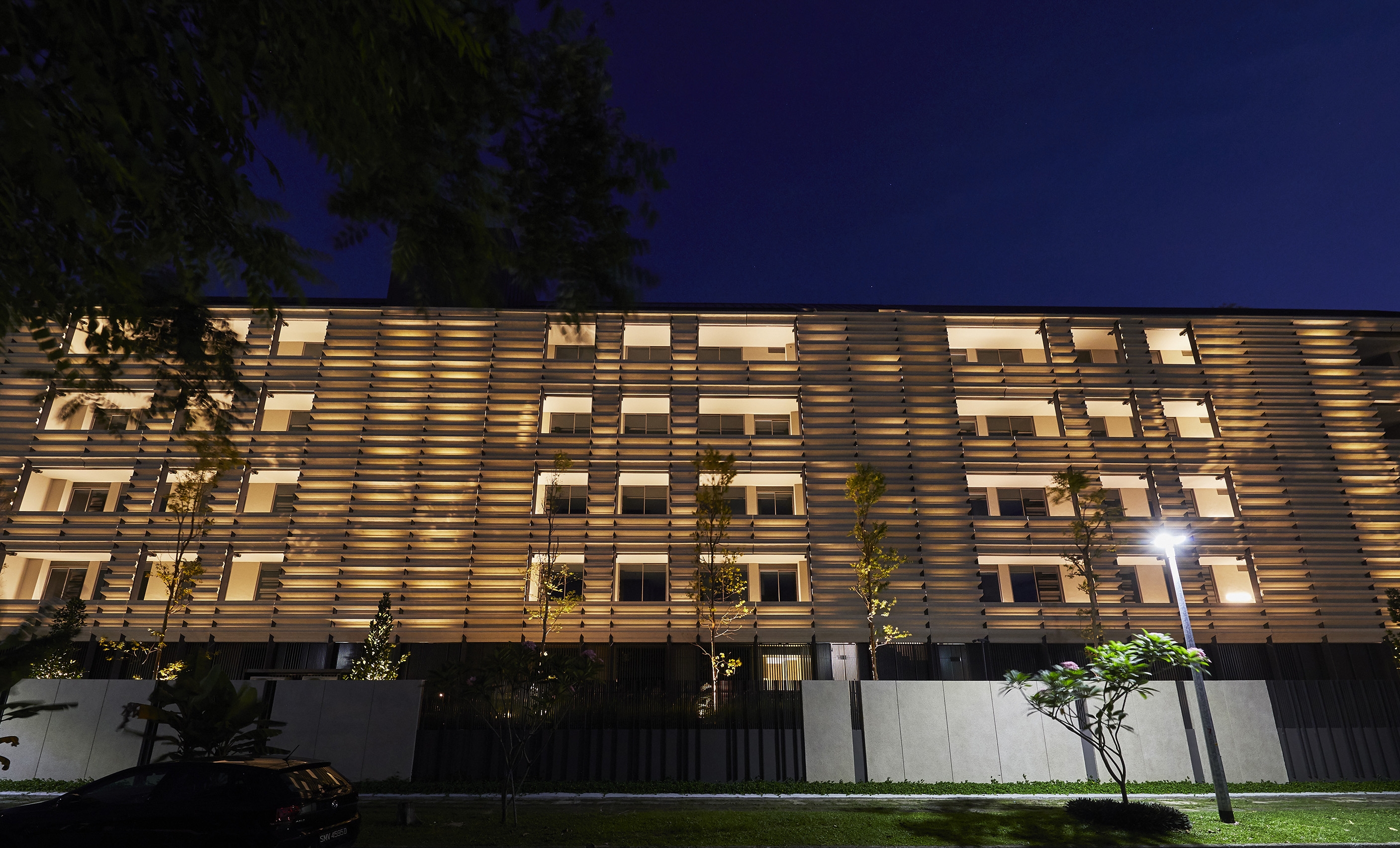
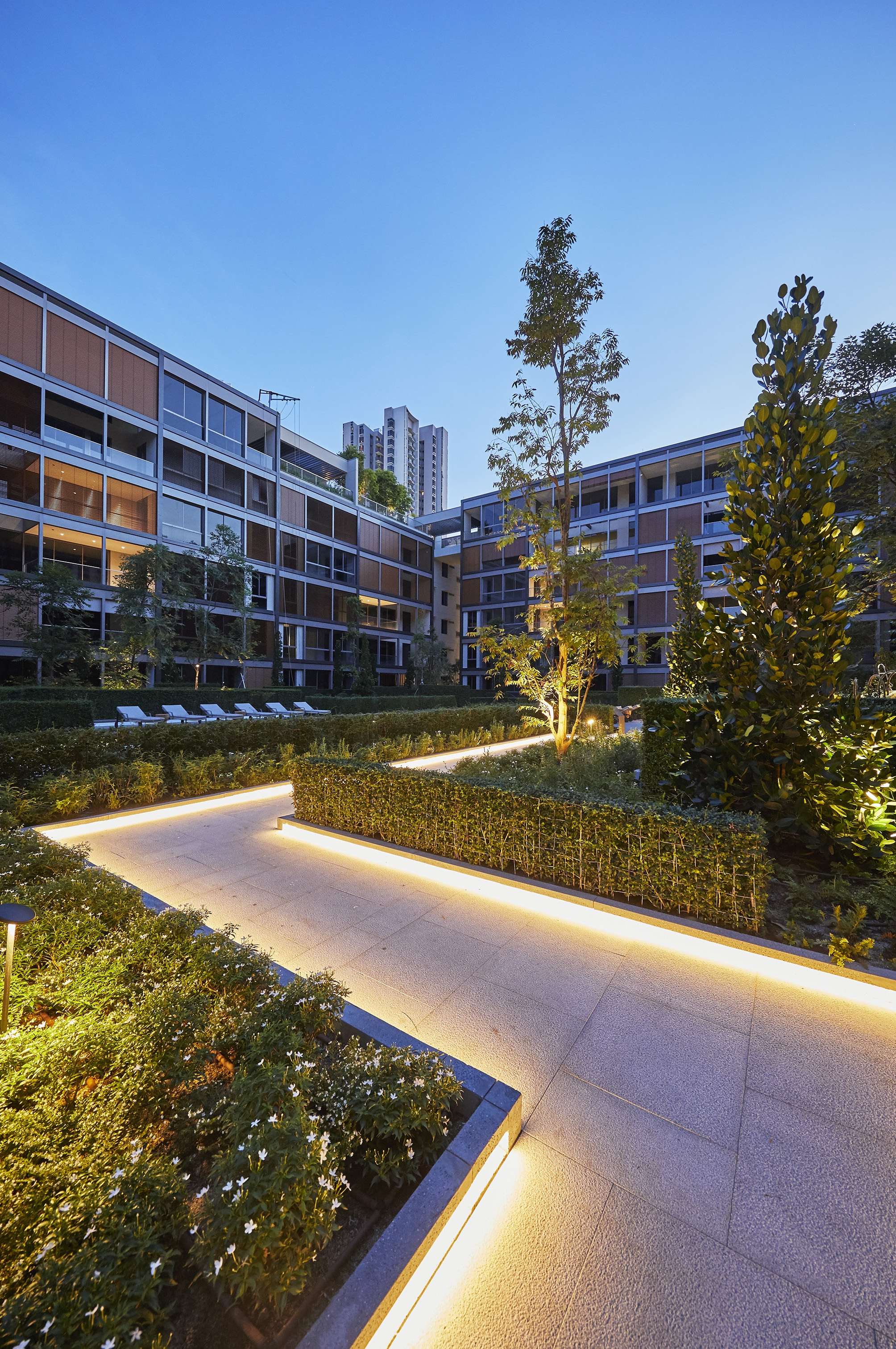
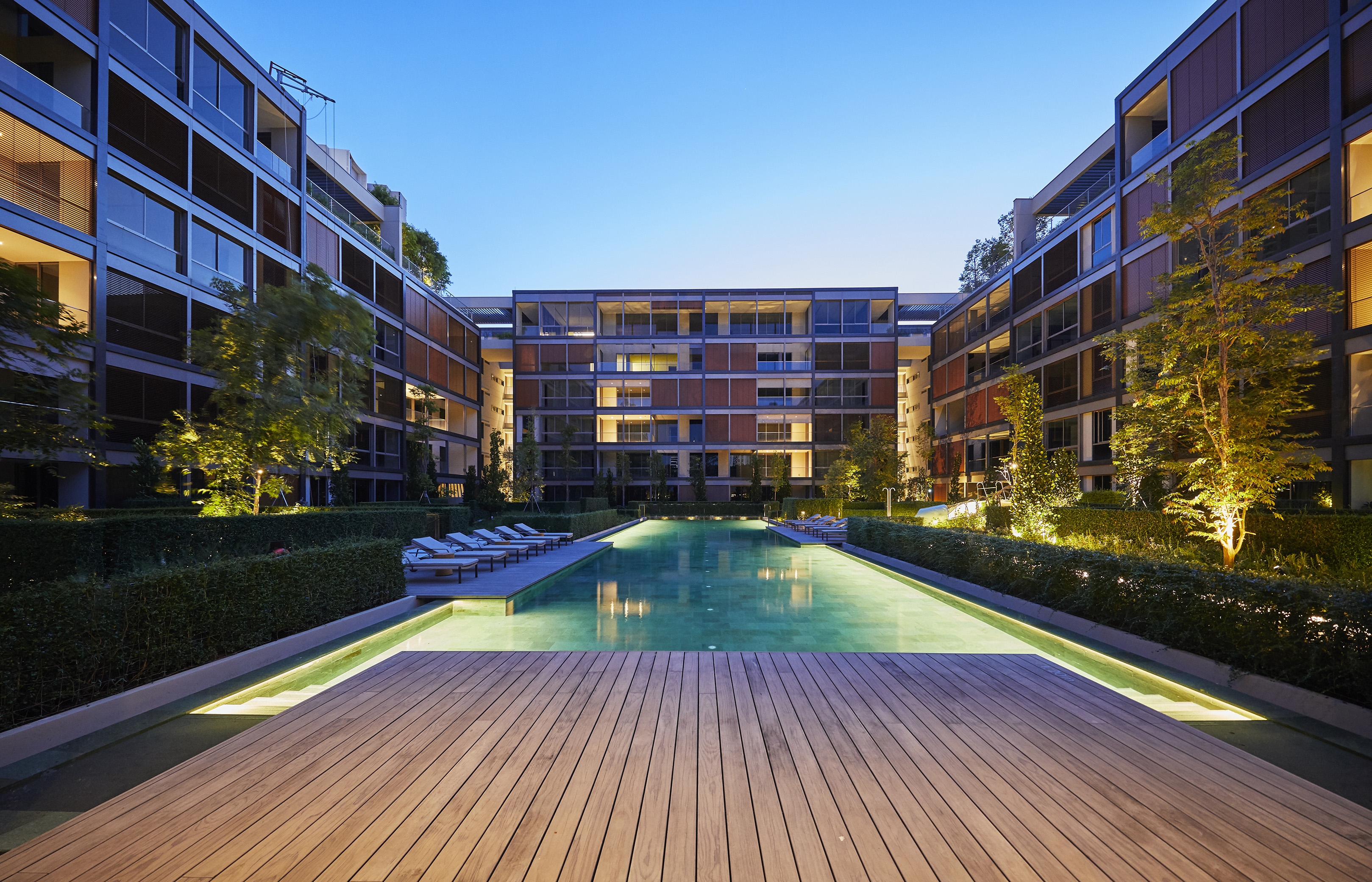
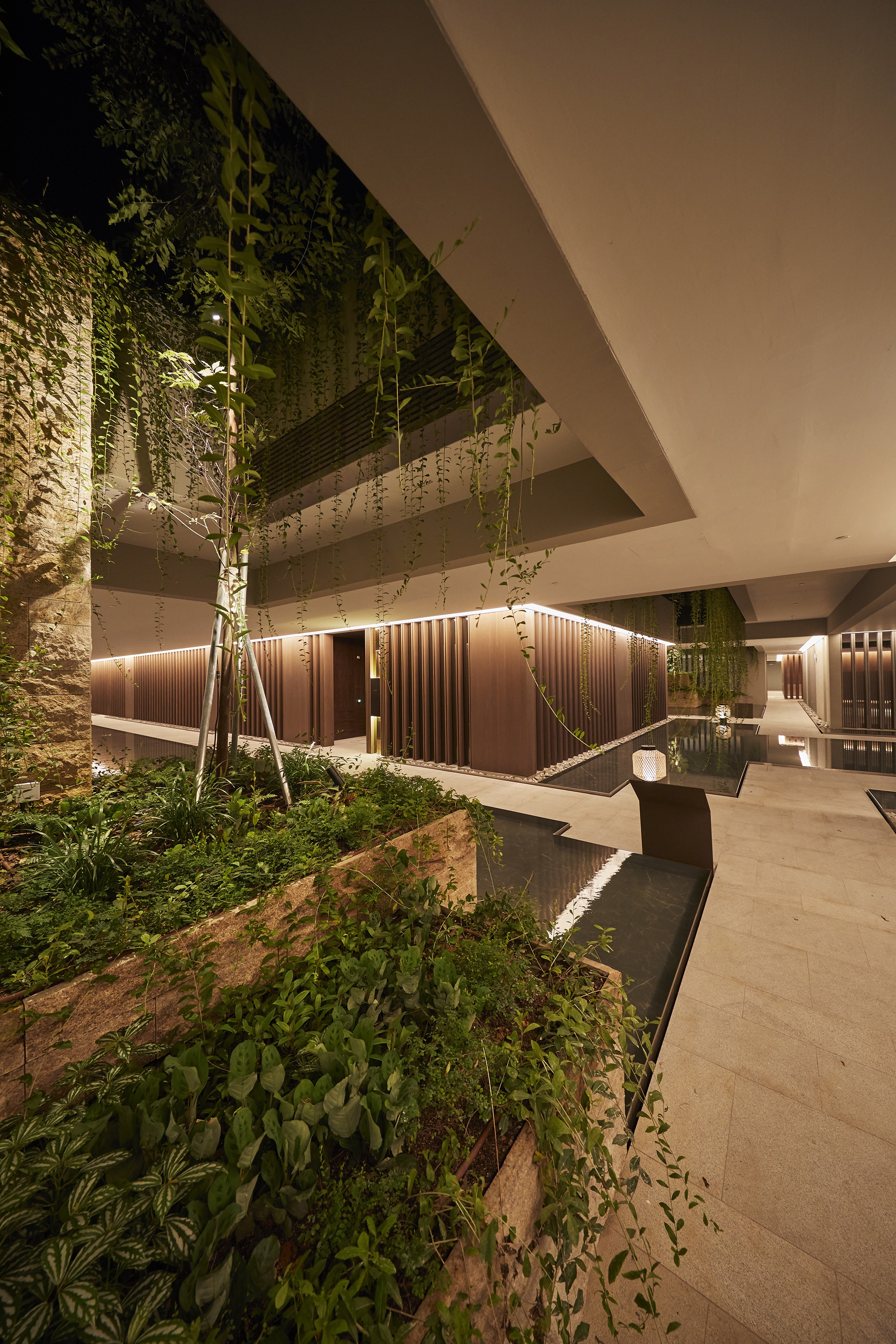
Hero shot — dusk facade. Notice how the louvre depth is revealed by grazing light, not flat wash.Pool deck — LED strip in pool edge + uplit trees. Photographic, no numbers shown.Basement drop-off — coves and lanterns. Wayfinding sold as ambience.Garden uplights at tree base — same trick BSH can sell as "exterior accent kit".
What they SHOW the client
Atmospheric dusk photography only. No false-colour, no lux numbers, no plans visible on the public-facing portfolio. The persuasion is purely emotional — pool at twilight, lanterns at the drop-off, trees lit from below. They explicitly mention "digital simulation via DIALux to ensure even facade washing despite varying mounting distances" — DIALux is the proof behind the photo, not the deliverable shown.
What they SAY alongside
"The play and presence of light in the form of it being indirect, being ambient and yet staying hidden, while revealing forms, textures and layers."— Light Collab project page
"Light and shadow help to create a balance between the architecture itself and the enchanting tranquil gardenscape."— Light Collab project page
Layperson takeaway
"I want my home to feel like that pool deck — soft, warm, mysterious, no lamp shining in my eyes." A homeowner doesn't need to know it's 2400K cove + 7° narrow uplighter. They need to see the photo and feel the night.
"Glowing golden beacon at dusk" — the entire pitch in one shot.The 16-metre shelving wall — back-lit so onyx becomes its own lantern.Sales floor. Light source invisible; only the material glows.The "paranormal" wealth view — light frames the contents, not the room.
What they SHOW
Five hero photographs. One night facade, three interiors of the lit onyx wall, one elevated POV. No technical drawings published. The "before" doesn't exist; the case is sold as a single emotional arc — exterior promise to interior reveal.
What they SAY
"At dusk, The Reserve evolves into a glowing golden beacon — a hint at what lies within."— Light Collab project page
"The challenge for lighting design was that the onyx can be seen from both outside and inside" — solved with concealed customised LEDs.— Light Collab project page
Layperson takeaway
Lighting can turn a material (stone, wood, fabric) into the actual product. For BSH this is the kitchen marble backsplash story, or HDB feature wall — "make your stone glow, not just be lit."
10-metre warehouse volume — daylight + tunable white uplight on soffit.B Bar pocket space. CRI97 on every product, not just the meat counter.Oyster bar — accent spots at 2.6m. Skin and food glow because nothing fights for attention.Beauty Bar — daylight contrast against atrium. Visible "change throughout the day".
What they SHOW
Mostly photography by Jovian Lim — atmospheric, brand-magazine quality. No raw lux maps. The "system" is communicated by labelled hero shots that match the four-layer description in the copy: ceiling uplight → 5.5m spot → 2.6m accent → in-shelf integrated.
What they SAY
"Instead of using special food colour for various areas such as fresh fruits, meat and seafood, the spotlights used are all CRI97."— Light Collab
"The 10-metre volume filled with daylight experiences where shoppers and diners are able to feel the ambience change throughout the day."— Light Collab
Layperson takeaway
"Use ONE high-quality light source, not five different mediocre ones." The single CRI97 line beats every technical chart — it sounds expensive, sounds confident, and the photo proves the food looks right.
Clarity★★★★★
Persuasiveness★★★★★
Reproducibility for BSH★★★★★
04 · PARKROYAL COLLECTION Marina Bay — Light Collab
Firm: Light CollabCity: Singapore (former Marina Mandarin)Type:Hotel Hospitality renovation with indoor gardenAward: IES Award of Merit 2021, LIT Honorable MentionLink:lightcollab.com/projects/parkroyal-collection-marina-bay
Indoor garden atrium — grow lights hidden inside the trees themselves.Reception. The greenery, not the desk, gets the spotlight.Dining facing the garden — ambient dim enough to let plants "take centre stage".
What they SHOW
Day vs evening contrast — 3800K "forest" mode by day, 3100K "garden" mode at night. Same room, two scenes, two photos side by side. This is the most reproducible technique for BSH: take ONE room of the home, photograph it at two scenes, sell the dimming/tuning.
What they SAY
"The grow lights need to have very controlled optics, so it does not ruin the ambience of the hotel."— Light Collab
The atmosphere shifts between "being in the forest" by day and "an atmospheric garden" by evening.— Light Collab
Layperson takeaway
"Light changes the time of day in a room." This is the single most powerful idea to sell on bshsg.com — a homeowner who renovates once every 10 years can be sold a tunable / scene-able system because they can see the same kitchen at 7am breakfast and 9pm dinner-party mode.
Lightcollab.com/assets/image/project/the-reef-at-kings-dock — 180m floating deck, dusk lighting along corridors
Concealed handrail LED — guides residents without aiming light at their eyes
What they SHOW
Floating deck at dusk; pool with no visible recessed wall lights ("glareless"); handrail and cove-only solution. The argument is sold by absence — you can't see where the light is coming from, only the result.
What they SAY
Residents "experience the pool and looking across the sea without any light source aiming at them."— Light Collab
A "Journey to Enhance Focus of Public Engagement with Nature and Marine Environments."— Light Collab
Layperson takeaway
"Good lighting is the lighting you don't see." Frame the BSH product offer around the result, not the SKU. A condo owner doesn't want to "buy 8 downlights" — they want "no glare in my eye while reading at the dining table at night."
Clarity★★★★★
Persuasiveness★★★★★
Reproducibility for BSH★★★★★
06 · Ritz-Carlton Residences Penthouse — Illuminating Asia
Firm: Illuminating Asia SG · Chan Siew Ying leadCity: Singapore (Cairnhill Road)Type:Residential 3-storey penthouse, 360° city viewsAward: LIT Awards 2026 — LED Interior Luxury Living winnerLink:litawards.com/winners/winner.php?id=3559
~12 hero photos on LIT Awards page: master bed wave pendant, gold-finish dining, living with floor-to-ceiling glass
The hero is the "wave" pendant in the master bedroom that creates a "seabed aesthetic". Then a series of room-by-room photos at evening with consistent warm-white CRI90. Specific scene-naming, no DIALux outputs — just the photo plus the named feeling.
What they SAY
"Modern fine luxury lighting design theme aims to complement the changing outdoor natural lighting from dawn to dusk."— Illuminating Asia / LIT submission
Layperson takeaway
A homeowner reads "complement dawn to dusk" and pictures their own view from their condo. The technical proof (CRI90, 2700K, smart zone control) is one line — the picture and the metaphor (wave / seabed / dawn) do the work.
Jewel Changi Rain Vortex — hidden downlight that catches falling water mid-air
Sentosa Sensoryscape — landscape narrative threaded through coloured washes
LPA philosophy diagrams from lighting.co.jp — "learn from natural light"
What they SHOW
Architectural night photography at scale. LPA almost never publishes DIALux false-colour to clients. Their portfolio leans on the photograph + a one-line philosophy. "Selected projects" page lists location and year, treats each as a brand reference.
What they SAY
"The most important aspect of lighting design is learning from natural light."— LPA philosophy statement
"Create comfortable yet inspiring environments of daily life."— LPA
Layperson takeaway
Tie every lighting decision to "what nature does at this hour." This frame is intuitive — homeowners understand sunrise, midday, sunset, candle. They don't understand 2700K vs 4000K until you say "morning vs noon vs candle."
Firm: Light Cibles · Emmanuel Clair (Paris/SG/Tianjin/KL)City: Singapore (since 2007 office)Type:Civic / sports Stadium with 312m retractable LED roof, Esplanade, FullertonAward: IALD 2012, IES 2012, BCA Construction Excellence 2013/14Link:light-cibles.com
Sports Hub roof — RGBW LED, photographed during SEA Games opening
Esplanade durian shells lit with warm internal glow
What they SHOW
Iconic structures at night — Sports Hub roof open and closed, Esplanade shells, Fullerton heritage. They lean on the public's existing emotional attachment to the landmark; the lighting becomes the "punchline" of an image the viewer already loves.
What they SAY
Light Cibles' public portfolio is photography-first with minimal copy. The pitch is implied: "we've done the Esplanade and Sports Hub — we can do anything." This is brand-by-portfolio rather than narrative-by-project.
Layperson takeaway
For BSH's e-commerce site, the analog is "we've wired Suntec, NTUC, Marina Bay — your HDB is in safe hands." Use famous-landmark credibility to anchor commodity-fitting trust.
Nipek homepage carousel — 7 projects, dark-mode, photograph only
"Beyond brightness, the quality of night" tagline over hero image
What they SHOW
Pure photography in a dark theme. Their site doesn't even title the projects on the home carousel — the picture is the title. Light fixtures are deliberately invisible in every shot. This is the Japanese "minus" aesthetic: subtraction sells.
What they SAY
"Beyond brightness, the quality of night."— Nipek
"Where darkness feels safe and light feels gentle. That is a truly human night."— Nipek philosophy
Stated principles: "light fixtures should not be seen, the focus is the space and people"; visual hierarchy; flexibility over static.
Layperson takeaway
"More light is not better light." This reframes the brightness-arms-race that most HDB owners default to. BSH can sell fewer, better-placed fixtures by leaning on "quality of night" as the unique value prop.
Clarity★★★★★
Persuasiveness★★★★★
Reproducibility for BSH★★★★★
10 · Leaf House Cotswolds — John Cullen Lighting
Firm: John Cullen Lighting · Sally Storey CD, Hazel Park leadCity: Cotswolds, UKType:Residential Architect-designed country home, Alex MichaelisAward: LIT 2025 ResidentialLink:johncullenlighting.com Leaf House
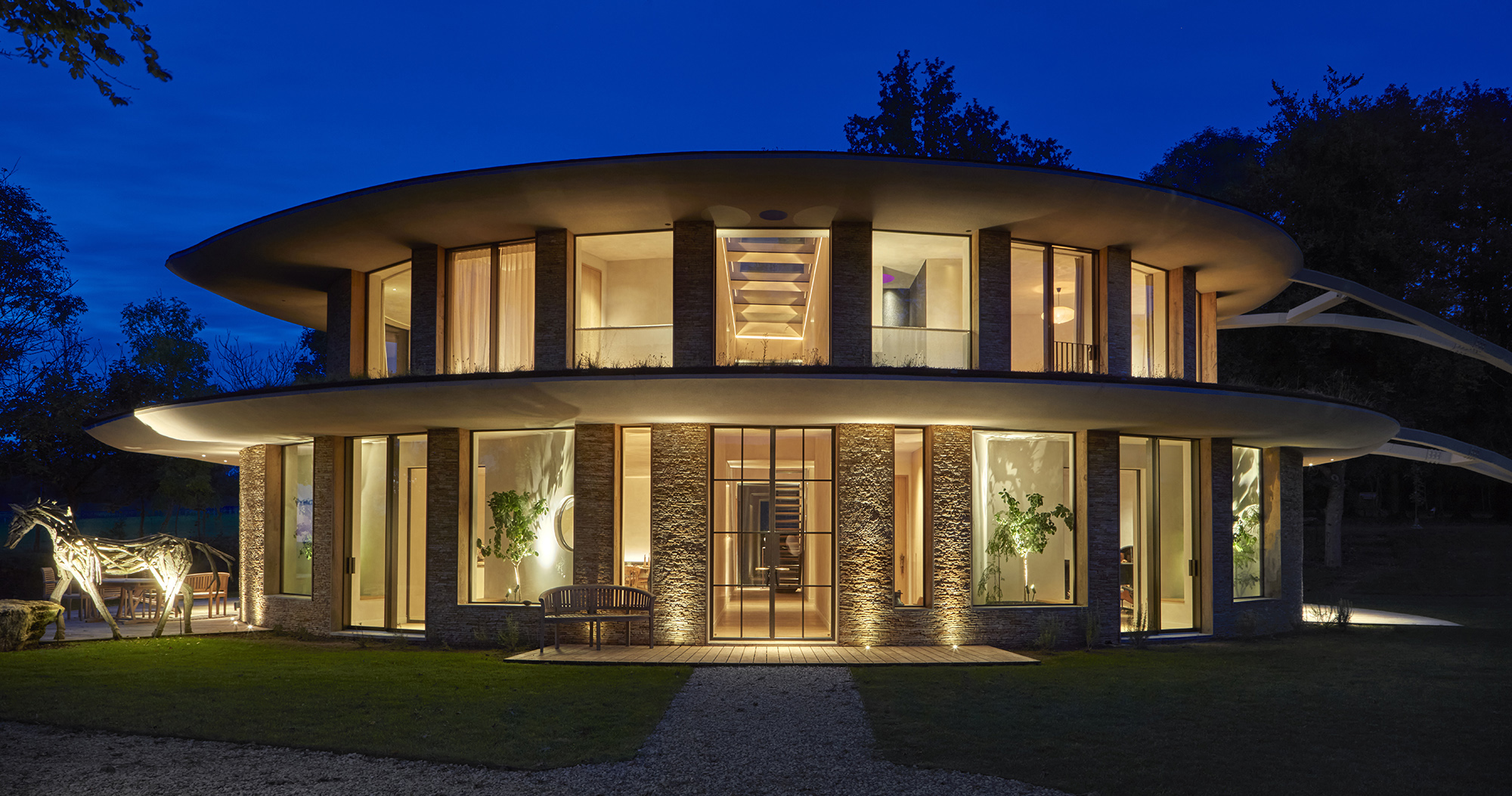
Hero image: house at dusk, low warm exterior wash through windows.
Entrance hall — concealed linear cove tracing the skylight line
Kitchen island with hidden 2400K LED beneath worktop
Children's en-suite with playful colour-changing skylight ring
What they SHOW
A narrative arc of seven photos that walk the homeowner through their own house: entrance → spine corridor → living → kitchen → master en-suite → children's bath → garden facade. No false-colour. No DIALux outputs visible. Just photographs annotated with what the fixture is doing in plain language.
What they SAY
"Spaces that feel as good as they look through the power of light."— Sally Storey / Hazel Park
Verbatim copy: "Lighting was designed to create a layered sense of warmth and intimacy"; "encourage the eye upward to appreciate spatial volume"; "blurring indoor-outdoor boundaries"; "playful colour-changing LED strips for mood-setting." Every sentence pairs a feeling with a fixture move.
Layperson takeaway
Tell a journey through the home, not a feature list of fittings. The HDB equivalent: door → hallway → living → kitchen → master → kids → balcony, each with a one-line feeling ("warm welcome", "easy walk", "soft conversation", "bright cook", "calm sleep").
Clarity★★★★★
Persuasiveness★★★★★
Reproducibility for BSH★★★★★
11 · Perfect Home (Victorian Townhouse) — John Cullen Lighting
Firm: John Cullen Lighting · Sally Storey + Shalini Misra IDCity: London, UKType:Residential Victorian terrace with art collectionLink:johncullenlighting.com perfect-home-lighting
Hero — staircase with under-tread Contour LED, "floating effect" on marble.
Hallway with artwork accent lighting
Spiral staircase, red tin tile reflection
Snug / study room with picture window "art installation at night"
What they SHOW
One signature image per room. The staircase is the hero — chosen because "floating marble" is a single visual idea anyone gets. The picture window at night ("art installation") is the second hero. Both are photographs of well-known visual tropes lit deliberately.
What they SAY
"Multi-layered lighting effects were introduced to complement the different materials throughout the property."— John Cullen Lighting
"Sculptural piece of lighting through the marble staircase" creates "a floating effect."— John Cullen Lighting
Layperson takeaway
Lighting can levitate things. This is a single tangible idea. On BSH's site: "make your TV console float", "make your bathroom mirror float", "make your floating bed actually float at night."
Bedroom with bedside lamps, step lighting visible in next room
Multi-floor staircase with skylight detail
What they SHOW
Same room, day vs dusk. That single before/after-by-time trick recurs across all top-tier residential portfolios. The accompanying detail shots show backlit shelving with "silhouette effect" objects.
What they SAY
"The client's brief was for a subtle scheme which had pockets of luxury to fit within their budget."— John Cullen Lighting
"At night the lighting created something much more fun to be enjoyed by the client and their guests."— John Cullen Lighting
Match scheme to budget honestly. "Pockets of luxury" is the magic phrase — most HDB owners cannot afford whole-home tunable, but they can be sold ONE feature wall + ONE staircase + ONE feature bath. Tier the offer.
Master bathroom: 4 scene tiles — Purple Rain / Moonbeam / Candle Light / Vanity Day — same room, 4 looks
Master bedroom: 3 scene tiles — Relax / Retreat / Recharge — single image grid
Dining-living entertain scene, deep purple velvet chairs shifted by light
Natural Show timeline: dawn → blue noon → sunset glow → night
What they SHOW (this is the gold pattern)
The hero deliverable here is the scene grid: ONE room, TWO–FOUR labelled photos. Master bath at 1600K candle, 3000K vanity, 4000K cool, 6000K bright — actually published as four selector tiles with names. The 4-tile grid is exactly the trick BSH should copy on bshsg.com for each fixture family.
What they SAY
"It allows the homeowners to curate their environment and have these special moments... dial in the light for the artwork, the materials, the moods..."— Merrill Alley, Urbanspace
"We're able to pull together a complete solution for the project that took all those things into consideration."— Cecilia Ramos, Lutron
"Ketra's Natural Show keeps the homeowner in harmony with the rhythms of natural sunlight."— Lutron copy
Layperson takeaway
The scene grid is the single most homeowner-comprehensible artifact in the industry. Four named tiles ("Movie Night", "Saturday Dinner", "Sleep Mode", "Late Study") beat any lux number. Steven — this is the format for bshsg.com product pages.
Clarity★★★★★
Persuasiveness★★★★★
Reproducibility for BSH★★★★★
14 · Downtown Austin Hideaway — Lutron / Ketra
Firm: Lutron + Ketra in-condo installCity: Austin, TX (Lady Bird Lake)Type:Residential Compact condo with art collectionLink:lutron.com/case-studies/downtown-hideaway
Living room — lake view, downlights "almost disappear"
Kitchen — 4 scenes incl. "Bubbles" at 2000K
Bathroom + bedroom scene grid
What they SHOW
Named scenes again: "Relax", "Entertain", "Media", "Bubbles". A photograph per scene. Ketra's Natural Show timeline is illustrated by 3 photos at 3 times of day — same room.
What they SAY
"With the Ketra solution we are able to take the light outside and match the color temperature inside."— Lutron case study
"Achieving elegance to this level requires interior design, technology, and construction to all come together."— Lutron case study
Layperson takeaway
Scene names sell better than scene specs. "Bubbles 2000K with low-level music" is a one-line product story. "2000K dimmed cove at 12% with audio-zone 3 on" is a spec sheet. Use the first, footnote the second.
Clarity★★★★★
Persuasiveness★★★★★
Reproducibility for BSH★★★★★
15 · Hamptons Barnhouse — Lutron / Sasha Bikoff
Firm: Lutron + Audio Interiors install + Sasha Bikoff IDCity: East Hampton, NYType:Residential Beach house with maximalist interiorLink:lutron.com/case-studies/hamptons-barnhouse
"La Vie en Rose" wedding scene — rosy pink layered
Daytime "Energize" mode same room
What they SHOW
Same scene-grid format. Day vs sunset vs evening vs custom-event ("La Vie en Rose" for a wedding). The technology is sold by occasion-naming — anyone can imagine wanting a "wedding scene" or a "movie scene" without knowing how it's built.
What they SAY
"I'm a stickler for aesthetics and wanted to hide as much technology as possible."— Rob Davis, Audio Interiors
Marketing copy frames intelligent lighting as "an environment that ebbs and flows with daily activities" — synchronisation with natural daylight as the headline benefit.
Layperson takeaway
Occasion-named scenes ("Chinese New Year", "Hari Raya open house", "Saturday breakfast", "Movie night") are emotionally home-specific. BSH's bshsg.com can pre-package SG-flavoured scenes for fixtures it sells.
Clarity★★★★★
Persuasiveness★★★★★
Reproducibility for BSH★★★★★
16 · Sydney Apartment Lobby Retrofit — Erco Australia
Firm: Erco Australia (manufacturer-led case)City: SydneyType:Residential common area 6-luminaire retrofit, lobbyLink:erco.com Sydney lobby case study
BEFORE — 4000K downlights, glare on shiny floor
MID-INSTALL — partial completion visible
AFTER — six 3000K low-glare wallwashers, artwork restored
What they SHOW
The textbook BEFORE / AFTER side-by-side, plus a mid-install. This is the most direct, lowest-skill, highest-trust presentation format in lighting. The viewer doesn't need to read anything — the image stack delivers the entire case.
What they SAY
"4000K downlights are glare-filled and create harsh reflections in the shiny floor."— Erco
"Warm 3000K light retains the required brightness... the true grandeur of the artwork is restored."— Erco
"Sometimes a simple upgrade of the light is all it takes to return a good design to an excellent human experience."— Erco
Layperson takeaway
Before/after is the single most efficient narrative format for HDB. Almost every Singapore homeowner has a "current condition" they hate. BSH can run a free-lux-audit programme that ends with a before/after render — that IS the marketing.
Artem Shevchuk private home — DIALux Evo render, photoreal interior.Living room concept — same room photographed in two scenes.The "evening" scene — same model, dimmed warm.Private home detail — note clean photorealistic style, no false-colour overlay shown.
What they SHOW
Pure DIALux Evo raytraced renders, photographically dressed — furniture, textures, plants, books. The Behance designers almost never publish false-colour as the hero. They publish the photorealistic render as if it were a photograph, then bury the lux map and isolines deeper in the project (or omit entirely).
What they SAY
Most Behance posts in this segment publish ZERO narrative copy — the project lives or dies on the render alone. The few that include text use plain process language: "modification of 3D model, visualisation and light calculation DIALux Evo, equipment selection and specification, enhance with AI" (Anna Denisova).
Tools listed: DIALux Evo, AGi32, Relux, Photoshop, AI enhancement.
Layperson takeaway
The DIALux render IS the client-facing artifact for solo designers — but only when dressed with furniture/texture. Empty rooms with isolines are sold to engineers; furnished raytraced rooms with shadows and warm spill are sold to homeowners. BSH should always pair every DIALux output with a furnished photo-like version.
Clarity★★★★★
Persuasiveness★★★★★
Reproducibility for BSH★★★★★
18 · Private Villa KSA (Facade + Landscape) — Beshoy Nagy
Firm: Beshoy Nagy (independent, Cairo)City: KSAType:Residential Facade + landscapeLink:Behance: Private Villa KSA
3D photoreal night render — facade washed, palms uplit
False-colour heatmap — same view, illuminance reading
AutoCAD plan — fixture positions marked
BOQ table + datasheet thumbnails
What they SHOW (full DIALux package)
This is the most BSH-relevant deliverable in the entire study because it's a single freelancer's complete package: photoreal render, false-colour, plan view, BOQ, datasheets — all in one Behance project. It mirrors exactly what BSH could productise: "Pay $X, get the 5-document home lighting plan."
What they SAY
"DIALux Evo was utilized to simulate the lighting design, ensuring optimal distribution and maximum efficiency."— Beshoy Nagy
The 4-or-5 artifact package (photo render + false-colour + plan + BOQ + datasheet) is what professionals deliver. For BSH's HDB consumer market, COMPRESS it: ship just (photo render + scene grid + simple plan) and footnote the false-colour for the rare techy buyer.
Clarity★★★★★
Persuasiveness★★★★★
Reproducibility for BSH★★★★★
Synthesis — 5 narrative patterns that consistently work across all 18 cases
Across Singapore, London, Tokyo, Austin and the global Behance freelancer pool, five recurring narrative moves separate the top-tier client-facing portfolios from the engineering-grade ones. Every BSH product page on bshsg.com should hit at least three of these.
P1
The Scene Grid — same room, 2-4 named scenes
The single most reproducible technique. Lutron Seaholm publishes a 4-tile master-bath grid (Purple Rain / Moonbeam / Candle Light / Vanity Day). PARKROYAL shows 3800K day vs 3100K evening. John Cullen shows kitchen daytime vs dusk. The viewer instantly understands flexibility without reading a word. For BSH: Every fixture family on bshsg.com — show ONE living room photo, swap the Kelvin/dim level, name each tile ("Saturday breakfast", "Movie night", "Late study", "Reunion dinner"). The HDB owner closes their eyes and pictures it.
P2
Reveal the material, hide the source
Every premium portfolio — Light Collab (The Reserve onyx), Nipek ("light fixtures should not be seen"), John Cullen ("floating marble"), LPA ("learn from natural light") — sells the result, not the fitting. The hero photo never shows where the light comes from. The fixture is invisible; the wall/stone/wood/floor glows. For BSH: Product photography on bshsg.com should not be glamour-shots of the downlight. It should be photographs of the kitchen marble, the TV console wood, the bed headboard fabric — with the fixture in the background, half-hidden. Same SKU, ten different "material reveal" hero shots.
P3
Before / After, period
Erco Sydney's lobby retrofit. The literal cheapest narrative format that still beats everything else. No skill required to read it. Almost zero technical literacy required to grasp it. The viewer's eye does the math: "this picture is dark and uncomfortable, this picture is warm and welcoming, I want THAT." For BSH: Offer a "Free 30-minute lighting audit" — take 4 phone photos of the homeowner's existing kitchen / living / master / common bath, run DIALux on a scanned floor plan, return a photoreal render of THE SAME room with proposed fixtures. The before/after pair IS the sales pitch.
P4
Tell a journey through the home, not a feature list
John Cullen Leaf House: door → spine → living → kitchen → master en-suite → kids' bath → garden. Each room one feeling, one fixture trick. No bullet list of fittings. For BSH: Restructure the bshsg.com product hierarchy from BRAND > CATEGORY > SKU to ROOM > FEELING > KIT. "Welcoming entry kit", "Family-meal kit", "Couple-master kit", "Calm-kids kit", "Late-night-snack kid". The journey IS the catalog.
P5
One photoreal render > ten false-colour heatmaps (for laypeople)
The Behance freelancer survey is unambiguous: residential designers who succeed on Behance publish furnished DIALux raytraced renders, not isolines. The false-colour map is reserved for the engineering footnote. Steven's 4 reference screenshots reinforce this — the persuasive ones are the photoreal bedroom + living room (Sumaiya, Nelca Roco); the false-colour goes in a "Verified by SS 531 lux calculations" trust badge. For BSH: Lead with the photoreal render. Park the false-colour heatmap and isolines on a collapsible "Engineering proof" panel underneath. The order matters — first the picture they feel, then the numbers that justify the price.
Bonus pattern observed in every Singapore case: Layered language
Both Light Collab and Illuminating Asia and the entire local HDB lighting blog ecosystem speak the same vocabulary: "layered lighting" = ambient + task + accent. Warm white (2700-3000K) for HDB living/bed. Cool (4000K) for kitchen task. This is the Singapore lingua franca and BSH should use it verbatim on bshsg.com — it matches existing buyer mental models.